
Ever stood in front of a street food stall with your stomach saying “yes” and your brain saying “wait”? A stall’s handwashing setup is one of the fastest signals you can read, and you don’t need to hover or interrogate the vendor.
This quick scan works anywhere, from night markets to roadside grills. It focuses on three basics that matter most: water source, soap, and drying. If those three look solid, you’re already stacking the odds in your favor.
The 15-second handwashing station checklist (what you’re really checking)
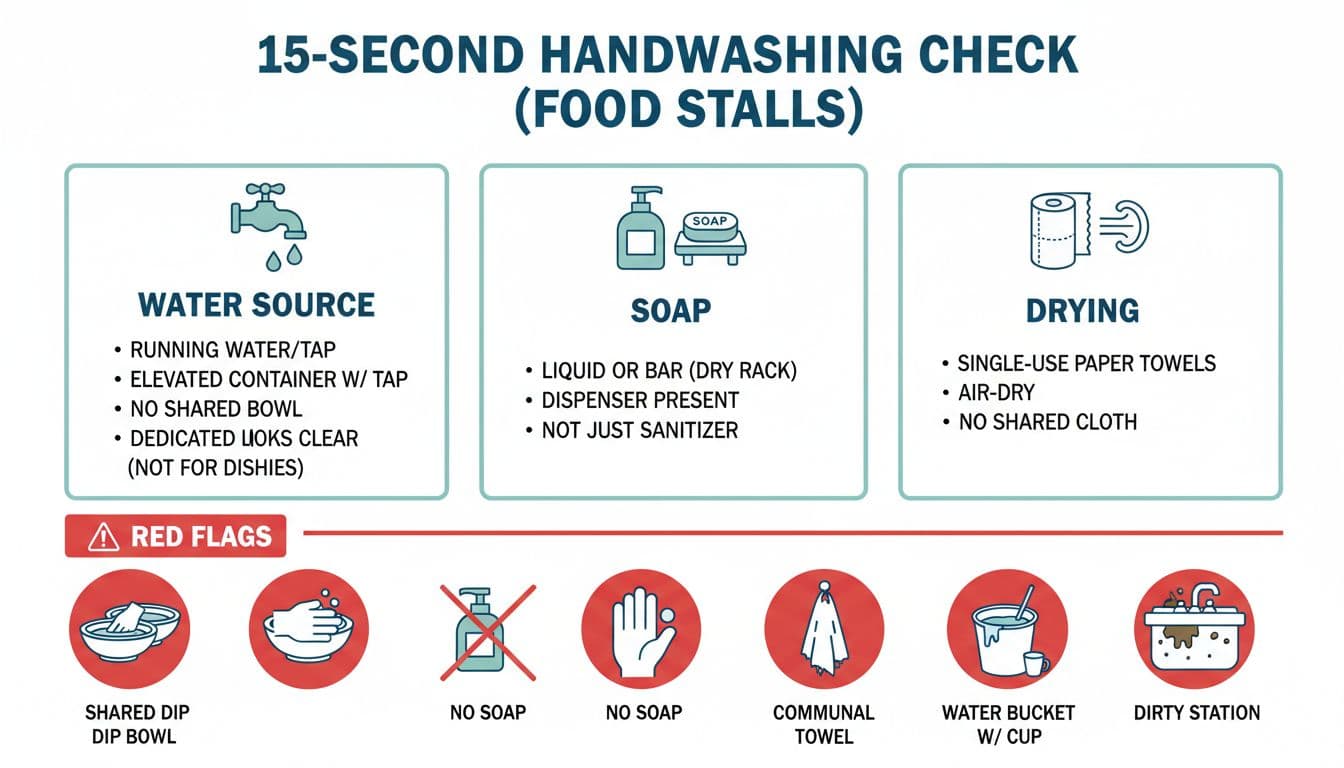
Think of this like a seatbelt check before a drive. You’re not proving the whole car is perfect, you’re looking for the big “yes/no” signals.
Here’s a simple handwashing station checklist you can run while you’re still deciding what to order:
| What to spot fast | Good sign | Red flag |
|---|---|---|
| Water | Running water from a tap, spigot, or foot-pedal | Shared bowl, bucket with dipper, or no water in sight |
| Soap | Liquid soap pump, or a bar on a draining rack | “We have sanitizer” but no soap |
| Drying | Paper towels, or clean air-dry setup | Communal cloth towel used by many hands |
If all three boxes look good, move on to the food itself. If one is missing, pause and watch how they work.
Water source: look for “running,” not “shared”
The fastest win is running water. A tap, spigot, or container with an elevated tap means used water leaves your hands instead of turning into soup for the next customer.
Good water setups often look boring, and that’s the point:
- A small tank with a tap, sometimes foot-operated
- A catch bucket underneath (so waste water doesn’t pool near food)
- Clear water, not cloudy or full of floating bits
A shared bowl is the opposite of boring. It’s a warning sign. If you see a bucket plus a cup or ladle, that’s “group rinse” water. In busy moments, it gets dirty fast.
For more background on what a basic station should include, Oxfam’s overview of practical handwashing setups is useful context: handwashing stations guidance from Oxfam WASH.
3-second micro-check: “Where does the dirty water go?”
If you can’t see where rinse water drains or collects, glance at the floor and counter edges. Standing puddles near food prep areas suggest the station isn’t planned, it’s improvised.
Soap: the setup matters as much as the soap
Soap isn’t a luxury item. It’s the part that breaks down grease and lifts grime so water can carry it away. A stall can have water and still miss the point if soap is absent or unusable.
Look for one of these:
- Liquid soap in a pump or wall dispenser
- A bar of soap that sits on a rack or dish with drainage (not on a wet counter)
What you don’t want:
- Soap that’s buried under utensils
- A bar sitting in a slimy puddle
- “We use sanitizer” as the only plan
Sanitizer can help when hands are already clean, but it doesn’t replace soap and water when hands are visibly dirty or greasy. If the vendor is handling cash, raw ingredients, or oily foods, soap matters even more.
If you want a deeper checklist view (written for food service compliance, but still readable as a customer), this resource lays out common expectations: hand hygiene compliance checklist for food service.
Watch the soap’s location
Soap should be reachable without touching food tools. If the vendor has to weave around skewers, chopping boards, and condiment bottles to get to soap, they won’t use it often during a rush.
Drying: clean hands can get re-contaminated fast
Drying sounds like a small detail until you notice what people wipe their hands on when there’s no plan.
Good options:
- Single-use paper towels
- Air-drying (hands drip dry, no shared towel)
- A clean, dedicated towel that is clearly for staff only and changed often (hard to confirm as a customer, so stay cautious)
Red flag you can spot instantly:
- A communal cloth towel hanging from the cart, used again and again
A shared towel is like a doorknob everyone licks. It can undo the whole wash in one wipe.
Even if everything else looks fine, a communal towel pushes the setup from “thoughtful” to “risky.”
Red flags that override everything else (even if the food smells amazing)
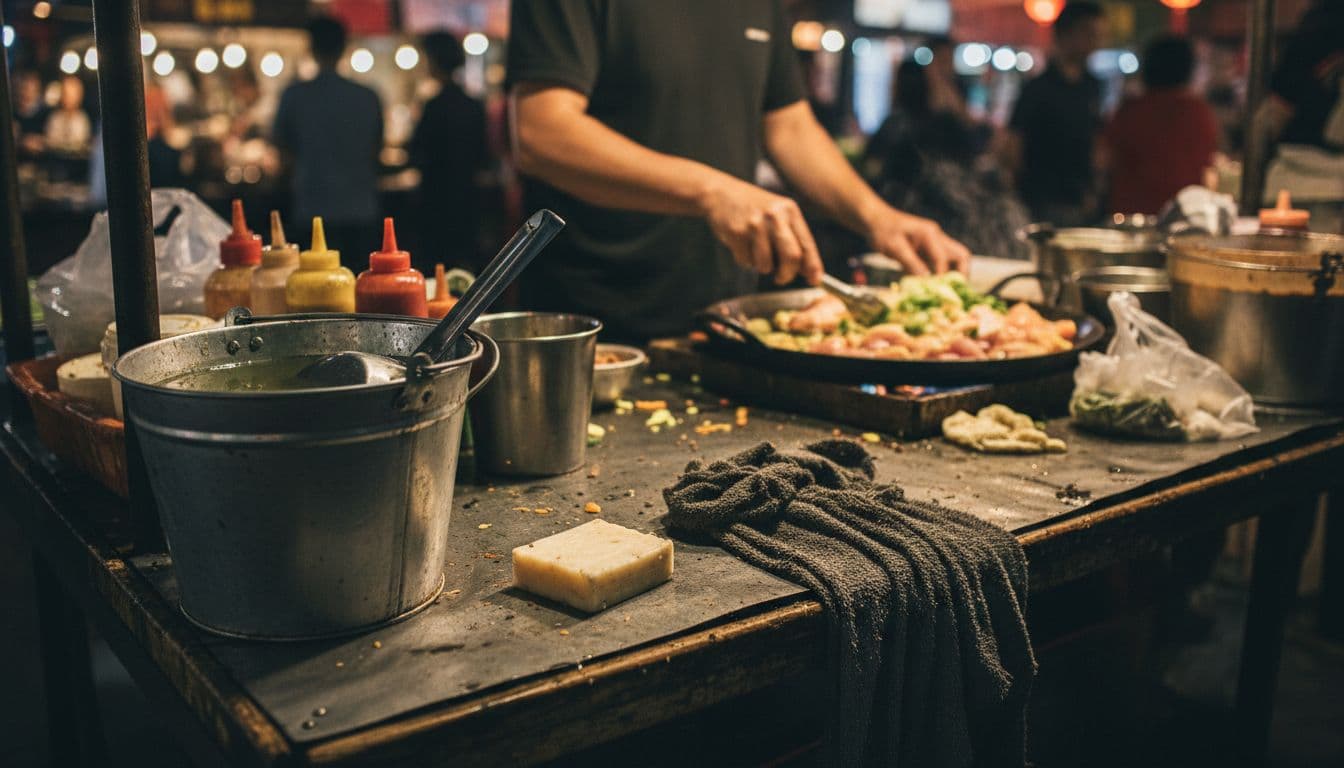
Some scenes tell you to walk away, even if you’ve eaten there before.
Hard no signals:
- Bucket-and-dipper “handwash”
- No soap anywhere, or soap that’s visibly grimy
- A towel that looks damp, dark, and well-used
- Raw meat and ready-to-eat toppings handled on the same surface, with no handwash step in between
- The “handwashing station” is also the dishwashing station
Food safety training materials often focus on exactly these everyday contamination points. The FAO’s street food hygiene resource is a solid reference if you want the bigger picture behind these quick checks: FAO training materials on street food hygiene.
The bonus check: do they wash at the right moments?
A perfect sink doesn’t matter if nobody uses it. After your 15-second scan, spend another 10 seconds watching workflow.
You’re looking for simple habits:
- Washing hands after taking cash, before touching food
- Washing after handling raw ingredients, before garnishing or plating
- Washing before putting on gloves, and after changing them
Gloves can fool customers. Gloves get dirty just like hands. If you see the same gloves touching money, phone screens, and your food, that’s not “clean,” it’s just hidden.
Many public health guides push the same core idea: scrub with soap for about 20 seconds, rinse under running water, then dry with a clean method. You don’t need to time them, just notice whether they take washing seriously or treat it like theater.
Quick examples that make this easier in real life
Not every stall looks the same, so use the same checklist in different settings:
Skewer grill at a night market: Oil and smoke mean hands get greasy. Soap and paper towels are a strong positive sign.
Chaat or sandwich stall: Lots of ready-to-eat toppings. Drying matters because hands go from wash to assembly fast.
Tea or juice counter: Lower raw-meat risk, but there’s still cash handling and shared cups. Running water plus soap still counts.
On Street Food Blog, the goal is never to fear street food. It’s to eat it with your eyes open, using small, repeatable checks that fit real travel.
Conclusion: trust the boring basics
A stall’s handwashing setup is a quiet story about how the vendor works when nobody’s watching. In 15 seconds, you can spot whether the station supports real washing or just looks like a prop. Use the handwashing station checklist, prioritize running water, soap, and safe drying, then watch whether they actually use it. Your best meals on the street should come with confidence, not crossed fingers.


Leave a Reply