
You’re standing at a street stall, the food smells amazing, and the line is moving fast. Then you notice the plates are getting reused, and you can’t see any kitchen behind the cart. That’s when street food hygiene becomes less about vibes and more about what you can spot in plain sight.
The good news is that dishwashing is one of the easiest safety signals to judge from the customer side. On Street Food Blog trips, the stalls that take washing seriously usually look organized, even when they’re busy.
Why dishwashing is the quiet backbone of street food hygiene
A clean plate isn’t just about looking nice. Dirty dishes and utensils can carry germs from one customer to the next, especially when stalls reuse bowls, tongs, knives, cups, and sauce spoons all night.
Think of a stall like a tiny restaurant running at sprint speed. When the rush hits, shortcuts show up first in the washing area. So the setup matters as much as the recipe.
For broader context on practical street food handling guidance, the FAO’s training resource on good hygienic practices in the preparation and sale of street food is a useful reference point.
What “wash-rinse-sanitize” should look like at a street stall
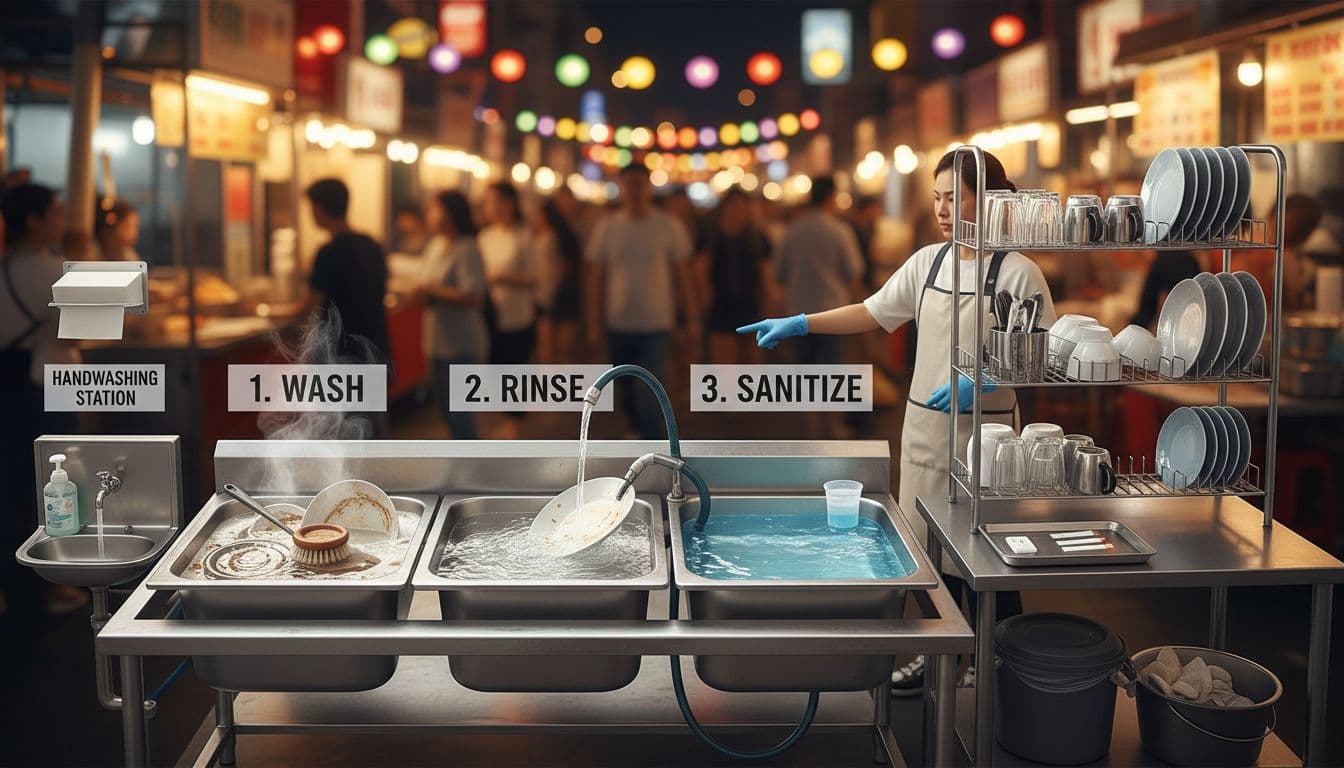
Even if you can’t see a kitchen, you can often see the dish flow. A safe stall usually follows a simple logic:
Wash: Hot, soapy water plus friction (a brush or scrub pad). This is where grease and food bits come off.
Rinse: Clear water that removes soap and loosened residue. If there’s no rinse step, soap and grime can carry into the next stage.
Sanitize: A separate container with a sanitizing solution. This step is about lowering germs after cleaning, not about scrubbing. Many operators use a measured sanitizer and sometimes keep test strips nearby to check strength.
Regulators in many places describe this same three-step idea for mobile and temporary food operations. One practical overview is NACCHO’s Mobile Food Unit Best Practices factsheet, which includes sanitation expectations commonly applied to food trucks and similar setups.
The easiest visual clues that the washing setup is actually working
You don’t need to hover or stare. A quick glance while you order can tell you a lot.
Separate containers, not one “everything tub”
A serious stall usually has two or three distinct basins (or a multi-compartment sink). When you only see one bucket doing all jobs, it’s hard to keep soap, food scraps, and sanitizer from mixing.
Sanitizer looks planned, not improvised
Look for small details that suggest intention:
Measuring cap or labeled bottle: indicates they mix sanitizer on purpose.
Test strip container: a sign they check sanitizer strength sometimes.
Clean-looking sanitizer basin: it should not have floating herbs, chili seeds, or oily film.
If you want a deeper look at how food operations document cleaning and sanitizing routines, the University of North Dakota’s Sanitation & Food Safety SOP manual shows how structured these steps can be in a larger setting.
Air-drying, not towel-drying
Air-drying is boring, but it’s clean. Towels can re-contaminate plates and utensils, especially if the same cloth is used for hands, counters, and dish drying.
A good sign is a dedicated rack or clean tray where items drip-dry. The best setups keep the rack off the ground and away from splashes.
A separate bucket for wiping cloths
Counters still need wiping, but wiping cloths can spread germs if they’re always damp and never rinsed. When you see a separate small bucket (often with a cleaning solution) for cloths, it suggests the vendor separates wiping from dishwashing.
Handwashing is its own station
Dishwashing is not handwashing. If the vendor has a small handwashing setup (water container with a spout, soap, paper towels), that’s a strong signal they understand basics, even in a tight space.
Red flags you can spot in five seconds
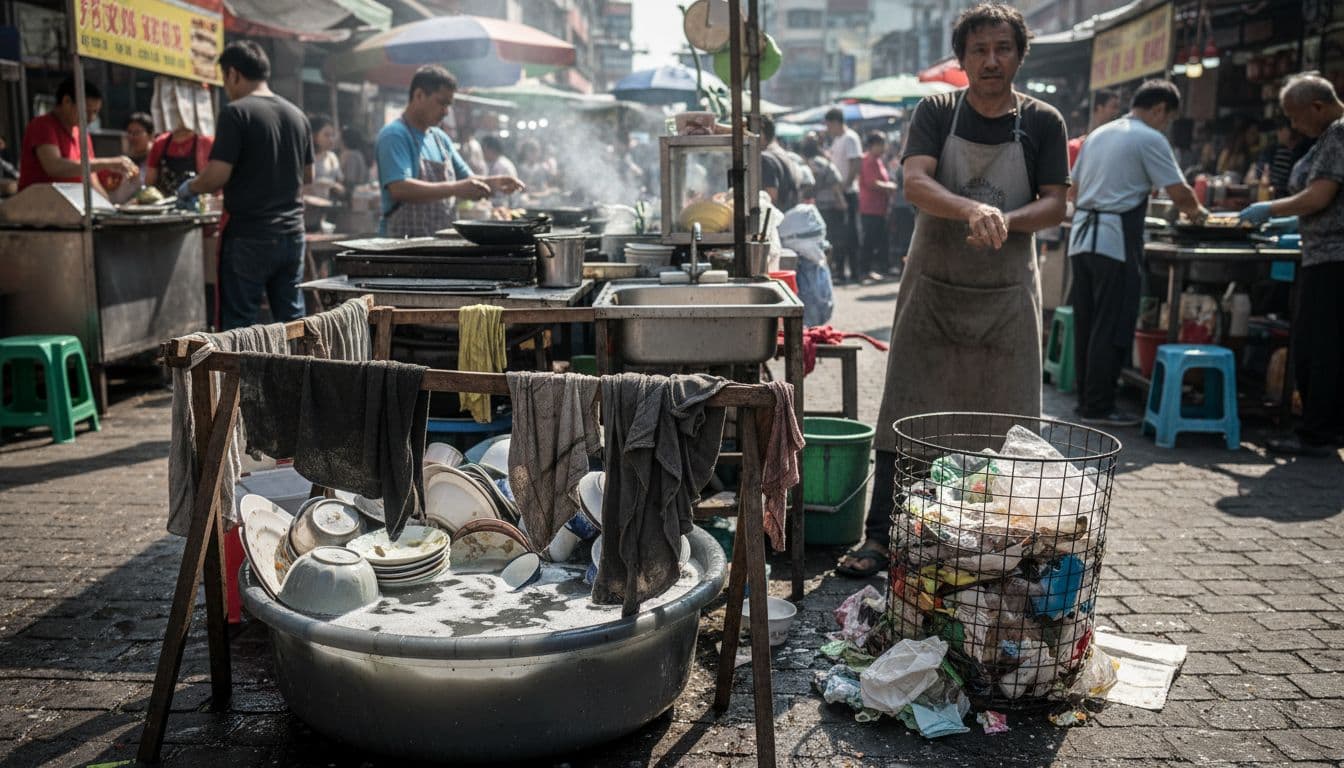
Some stalls cook great food but run messy washing. If you notice these, treat them as real warnings, not just “street charm.”
One tub doing everything: wash, rinse, and “sanitize” all in the same cloudy water.
Murky water that never changes: especially if it’s packed with scraps.
Towel piles used to dry plates and wipe hands.
Utensils stored in standing water all service long.
Clean and dirty stacks touching: washed plates piled right beside unwashed ones.
Trash overflowing near the wash area: it attracts pests and increases contamination risk.
A simple “watch test” that tells you more than any sign
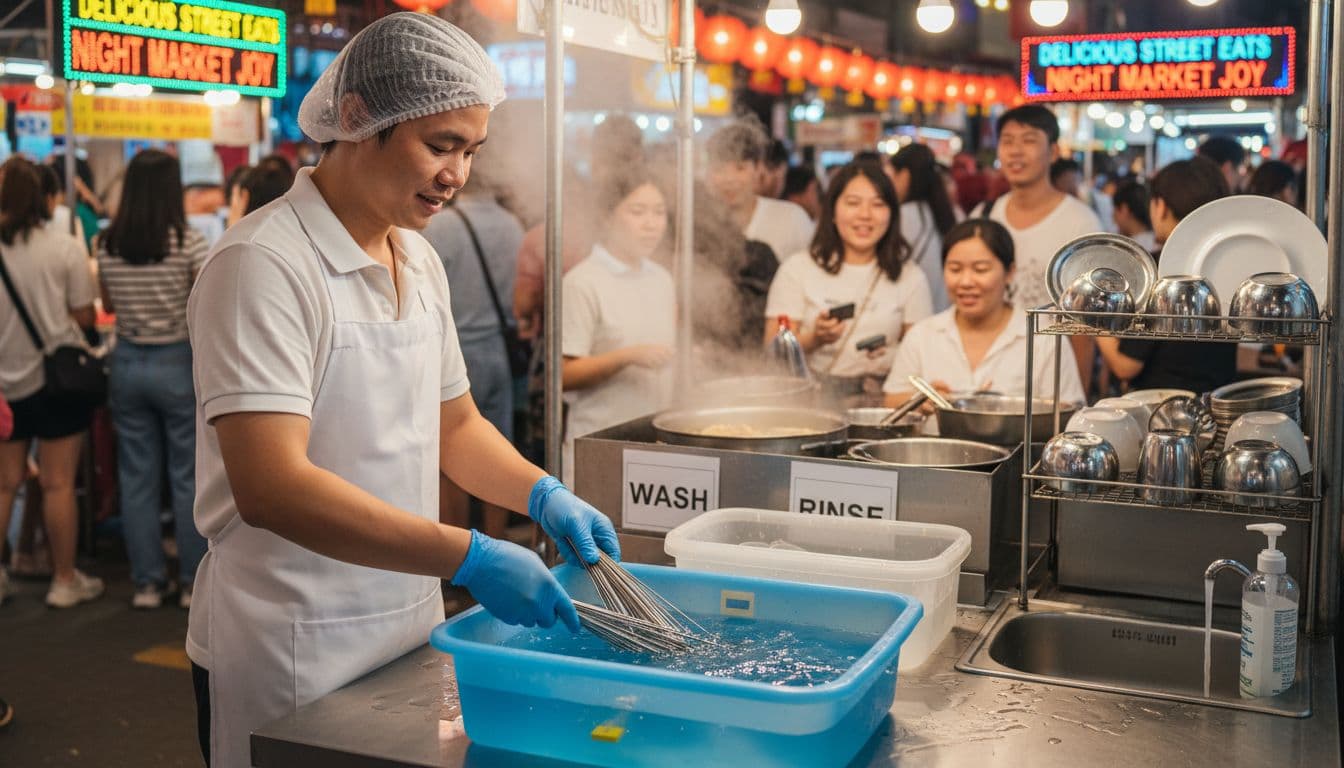
If you’ve got 20 seconds while waiting, watch what happens to one utensil or one plate.
A safer pattern looks like this:
- They scrub in soapy water, not just dunk.
- They move items to a rinse basin or rinse stream.
- They dip or soak in a sanitizer basin.
- They place items on a rack to air-dry, not on a random towel.
A riskier pattern is “dip, shake, wipe, serve,” especially when that wipe is a cloth that’s already seen a hundred plates.
Ask-friendly questions that don’t come off rude
You don’t need to interrogate anyone. A calm, curious tone works best, and you can frame it around preference.
Try lines like:
- “Do you have a separate rinse water too?”
- “Is that sanitizer water, or just clean water?”
- “Could you use a clean spoon for my chutney?”
- “Can I get it on a fresh plate, please?”
How they respond matters. A confident vendor usually answers quickly and keeps moving. If they look annoyed, or if the answer is vague and the process stays the same, that’s useful information.
Special caution: raw items and “no-cook” add-ons
Dishwashing gets more important when the menu includes lots of ready-to-eat parts, like chopped herbs, salads, fresh fruit, or sauces that sit out.
In those cases, look for extra separation:
- Separate utensils for raw and cooked items
- Covered containers for toppings
- Spoons stored cleanly, not soaking in mystery liquid
If the stall can’t keep basic separation, the washing setup probably isn’t strong either.
Conclusion: trust the setup, not just the smell
When you can’t see the kitchen, the dishwashing station becomes your window into street food hygiene. Look for three-step wash-rinse-sanitize habits, air-drying, and basic separation, and take messy shortcuts as a sign to move on.
Street food should feel fun, not risky. Next time you’re hungry in a night market, watch the wash station for a moment, then order with more confidence.


Leave a Reply