
You’re standing at a busy street stall, the steam smells amazing, and your order is almost ready. Then the doubt hits: is that “veg soup” actually built on chicken bones?
At street stalls, stock is the quiet ingredient. It can be hidden under spices, noodles, and sauces, and it’s also where mix-ups happen fastest. If you care about separate stock pots for vegetarian, religious, or allergy reasons, you don’t need a long interview. You need a quick, calm routine you can repeat anywhere.
This is the 60-second check that works in real life, even when there’s a line behind you.
Why stock is the easiest place for mix-ups
A stall can keep vegetables and meat separate on the board, then undo it all with one ladle of broth. Stock is also reused, topped up, and kept hot for hours, so it’s not always obvious what went in first.
Two points matter most:
- Cross-contact happens through tools, not just ingredients. A shared ladle can carry meat stock into a veg pot in one dip.
- Vague “veg” labels aren’t a guarantee. “Veg” sometimes means “no meat pieces,” not “no meat stock.”
If you want a basic refresher on cross-contamination logic (why shared utensils matter), the USDA’s handbook is a solid primer: Kitchen Companion: Your Safe Food Handbook.
The 60-second routine: Ask, Look, Listen, Confirm
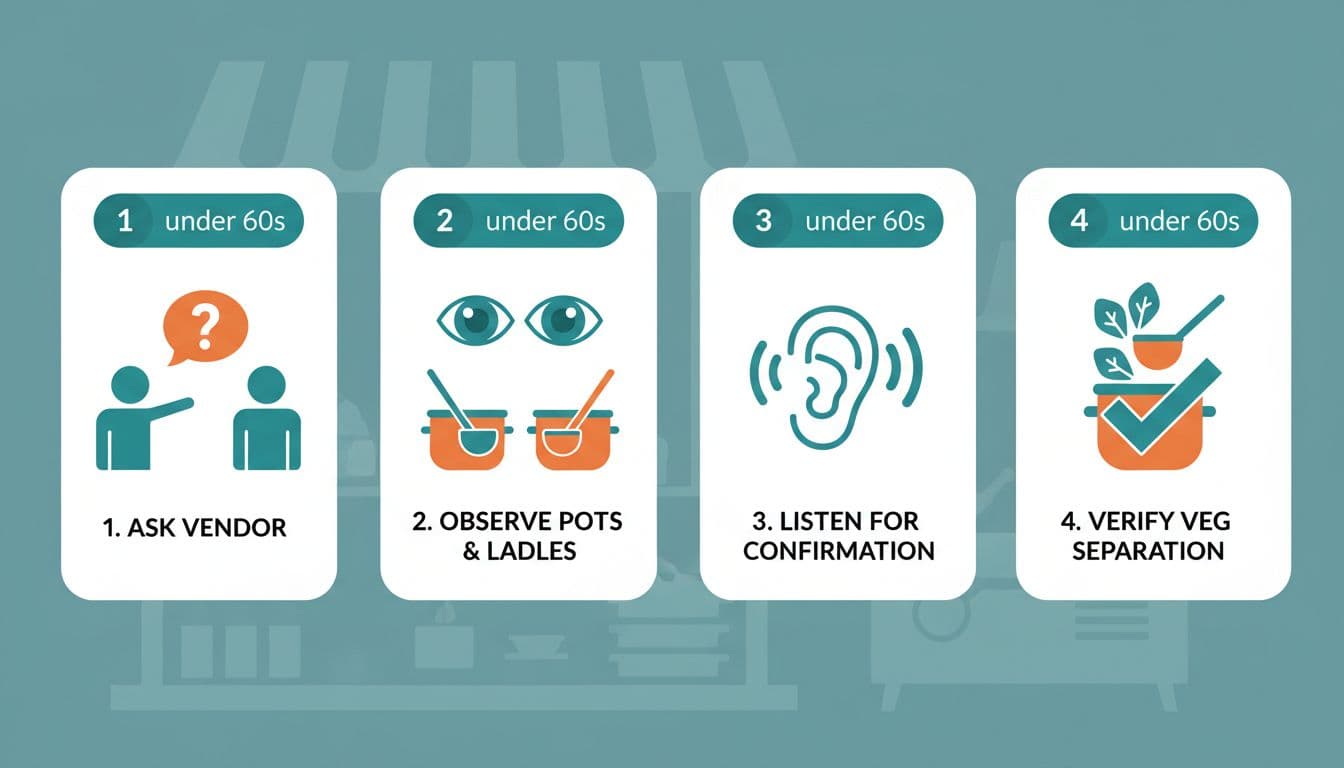
1) Ask (0 to 15 seconds): make it specific, not awkward
Don’t ask, “Is it veg?” That’s a yes magnet. Ask a question that forces details.
Try: “Is the veg stock made with only vegetables, no chicken, no bone broth, no meat?”
Then add the second part that makes it real: “Which pot is the veg one?”
A clear stall usually answers fast and points without drama.
What you’re listening for is a clean statement like: “This one is veg, that one is chicken,” not “It’s fine” or “Same same.”
2) Look (15 to 30 seconds): scan for separate pots and separate tools
Now do a quick visual sweep. You’re checking two things:
Separate pots: Are there truly two different vessels, kept in place, each with its own simmer?
Separate tools: Do you see two ladles, or at least one ladle that clearly lives with the veg pot?
A pro move is to look at where ladles rest. If both ladles sit on the same greasy tray, the “separate” claim gets weaker. If each ladle stays hooked to one pot, that’s stronger.
3) Listen (30 to 45 seconds): repeat-back confirmation
This sounds small, but it catches a lot of confusion during rush hour.
Say: “So this ladle is only for veg stock, right?”
Then pause. Let them confirm.
If they answer with action (switching ladles, pulling out a clean one, pointing again), that’s better than a rushed nod.
For broader street food safety habits (busy stalls, fresh cooking, safe choices), these guides are useful context:
- How to safely enjoy India’s incredible street food scene
- Is Street Food in India Safe For Tourists to Eat?
4) Confirm (45 to 60 seconds): watch the ladle dip
This is the final filter: don’t just listen, watch.
You want to see the veg ladle go into the veg pot and straight into your bowl. If the vendor dips into a different pot after you asked, or swaps ladles mid-motion, you have your answer.
If they’re moving fast, just hold your gaze on the ladle like it’s a tennis ball. The truth is in the dip.
Fast visual cues that usually tell the truth
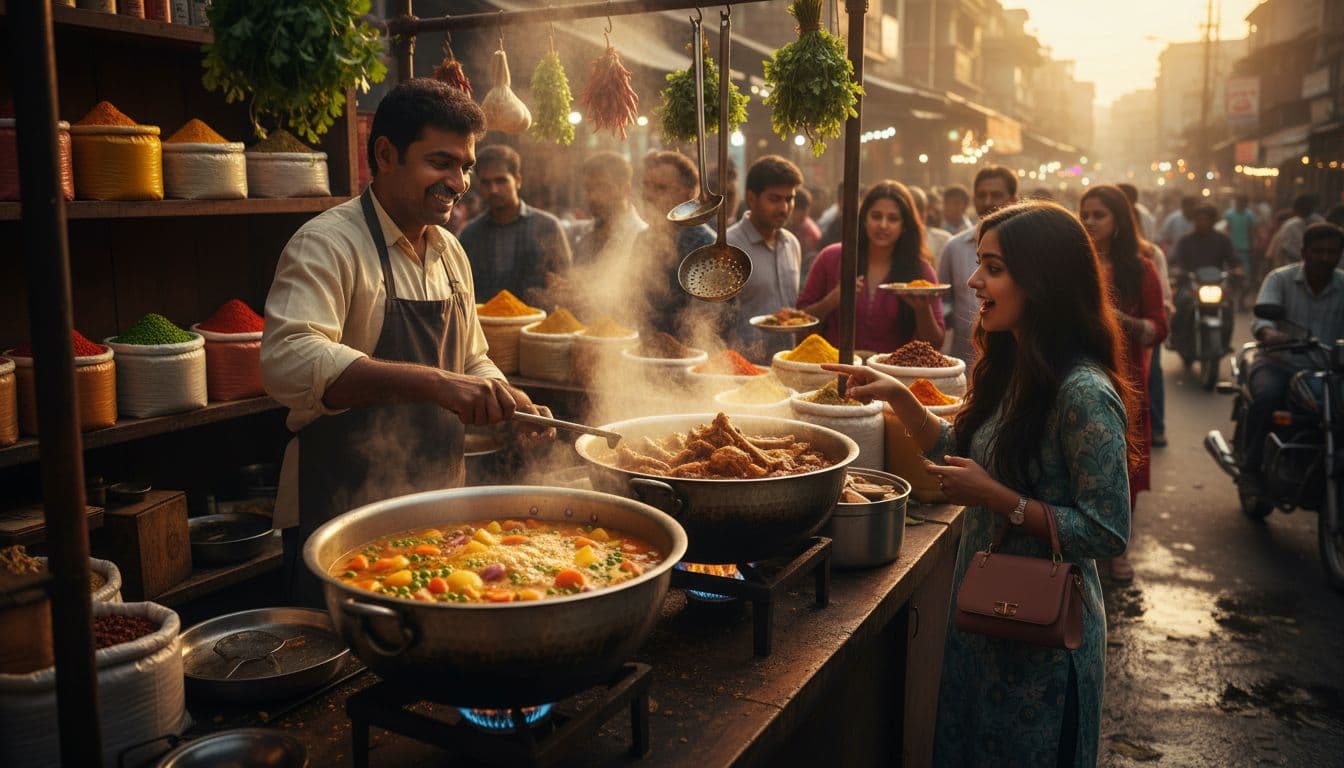
Some stalls make separation obvious without a word. Here’s what tends to correlate with good separation habits:
A fixed layout: Two pots that stay in the same spots all service. If pots are constantly swapped around, tracking “veg vs meat” gets messy fast.
Dedicated add-ons: Separate containers for toppings (herbs, fried bits, sauces). Vendors who separate stock often also separate finishing spoons.
Clean, confident pointing: When the vendor immediately points to one pot and one ladle, it’s a good sign. Hesitation often means the setup isn’t strict.
These cues aren’t proof by themselves, but they help you decide where to spend your 60 seconds.
Red flags: when to skip the stall (even if the food smells perfect)
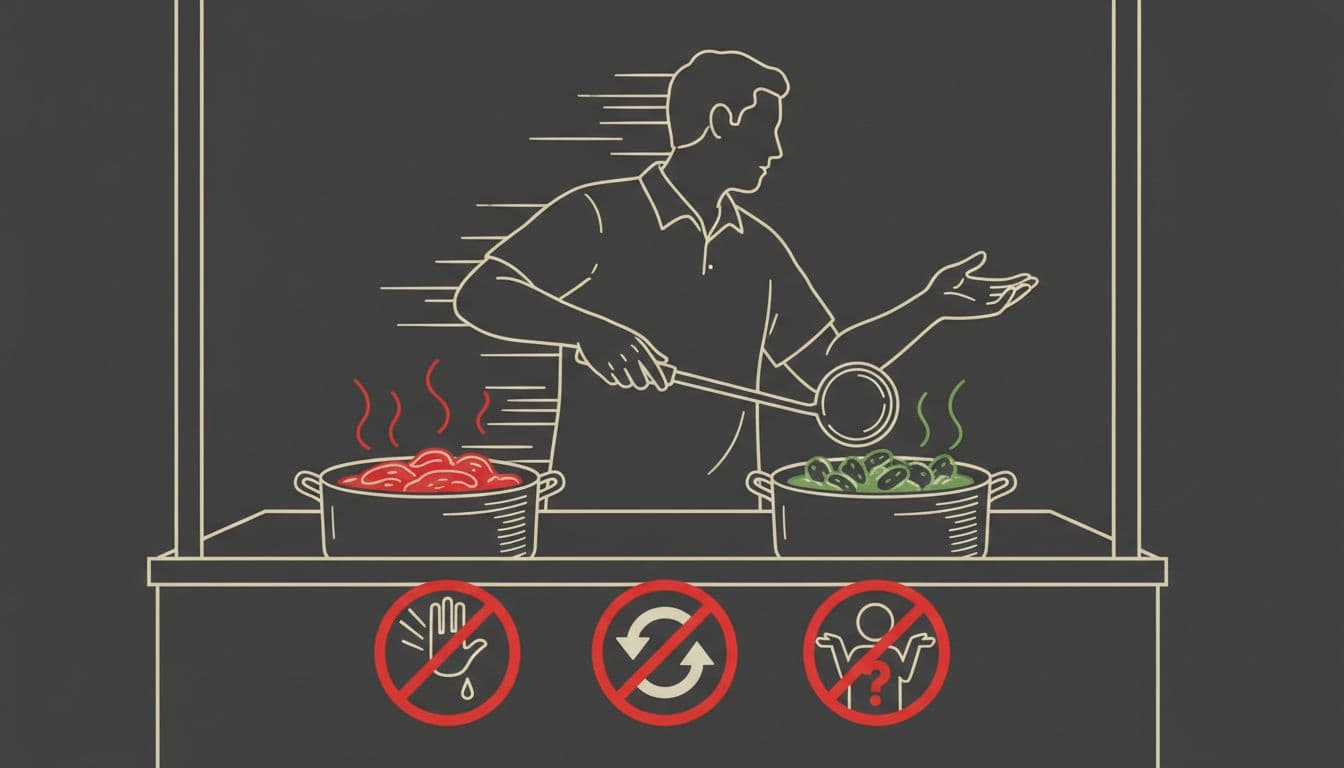
Some signs are hard stops if you’re strict about meat-free stock:
One ladle for both pots: If you see the same ladle touch both, separation is gone for that service window.
“Veg” without ownership: If nobody can tell you which pot is veg, or they won’t point, treat it as unknown.
Pot shuffling: If the vendor slides pots around after you ask, it can be honest chaos, but it’s still a risk.
Vague reassurance: “Don’t worry” is not an ingredient list. You want plain words: veg-only, chicken, mutton, bone broth.
If a stall hits one red flag, you can still choose to eat there. If you’re trying to avoid meat stock, walk away and save the regret.
If they can’t guarantee separate pots, choose foods that don’t rely on stock
Sometimes the best move is to pick a dish where stock isn’t doing the heavy lifting.
Good alternatives often include:
Cooked-to-order items: Fresh griddle foods, stir-fries made in front of you, or snacks fried from raw ingredients.
Dry or chutney-based snacks: Items that lean on spices, tamarind, herbs, and crunch rather than broth.
Simple “no stock” requests: If the dish allows it, ask for less soup, more veg, or a dry version.
For a vendor-side view of food safety habits (storage, utensils, hygiene basics), this guide is a helpful reference point: Food Safety Guide for Street Food Businesses.
“Separate stock pots” still fail without separate ladles (and clean rinse water)
Even with two pots, cross-contact sneaks in through the small stuff:
Shared strainers: Noodles or dumplings lifted from one pot, then dipped into another.
Shared topping spoons: A spoon used for meat garnish, then used for herbs.
Rinse bowls: If the same water bath is used to “clean” tools, it can spread broth traces.
A polite fix that often works: ask them to use a clean ladle, or ask them to pour from the pot without dipping a used ladle back in.
A quick script you can use without sounding intense
Keep your tone normal, like you’re checking spice level.
“I don’t eat meat stock. Which pot is veg-only?”
“Is this ladle only for veg?”
“Can you please use that ladle for mine?”
If they handle that smoothly, you’re probably in a good place.
Conclusion
Street food moves fast, but your standards don’t have to. A focused 60-second check, Ask, Look, Listen, Confirm, gives you a real shot at verifying separate stock pots without turning the counter into a debate. If the setup feels unclear, pick a dish that doesn’t depend on broth and move on.
Street Food Blog readers know the best meals come with trust, not stress. Next time you’re in line, watch the ladle, not the menu, and taste the city with more confidence.

Leave a Reply