
You can learn a lot from watching a dumpling stall for two minutes. The cook’s hands move fast, but the pace isn’t the real trick. The real trick is control: control of dough thickness, control of steam, control of sealing pressure.
If you’ve ever had a dumpling burst in the steamer, you’ve seen the chain reaction. A thin spot turns into dumpling wrapper tearing, steam finds the gap, juices run, and the filling dries out. At a good stall, that doesn’t happen often, because the cook is constantly checking, patching, and pinching.
This guide breaks down the three stall-side realities that decide whether dumplings stay plump or fall apart: wrapper tears, filling steam, and fold tightness checks (the last line of defense before the basket closes). It’s the kind of detail Street Food Blog readers notice, because it changes what ends up on your tray.
Why dumpling wrappers tear at street stalls
Street stalls don’t have the calm rhythm of a home kitchen. Dough gets rolled while customers queue, fillings sit near heat, and humidity changes by the hour. Most wrapper failures come from a few repeat causes.
Thin centers and thin “shoulders.” Many cooks roll wrappers with a slightly thicker center, then thinner edges for pleating. If the center ends up thin too, the wrapper stretches when it hits steam and splits.
Dry edges. Wrappers sitting uncovered lose surface moisture fast. Once the edge dries, it cracks instead of folding smoothly, and the seam won’t fuse.
Wet edges. The opposite happens when condensation drips or wet filling smears the rim. A wet rim feels sticky, but it can turn slippery under pressure, and pleats slide apart.
Dough that hasn’t rested. Freshly mixed dough fights back. It shrinks, it resists stretching, and the cook compensates by pulling harder, which creates weak spots.
Speed pressure. When orders stack up, wrappers get rolled faster. The rolling pin hits harder, the thickness varies more, and one wrapper in the batch becomes the “problem child.”
On-the-spot fixes for dumpling wrapper tearing
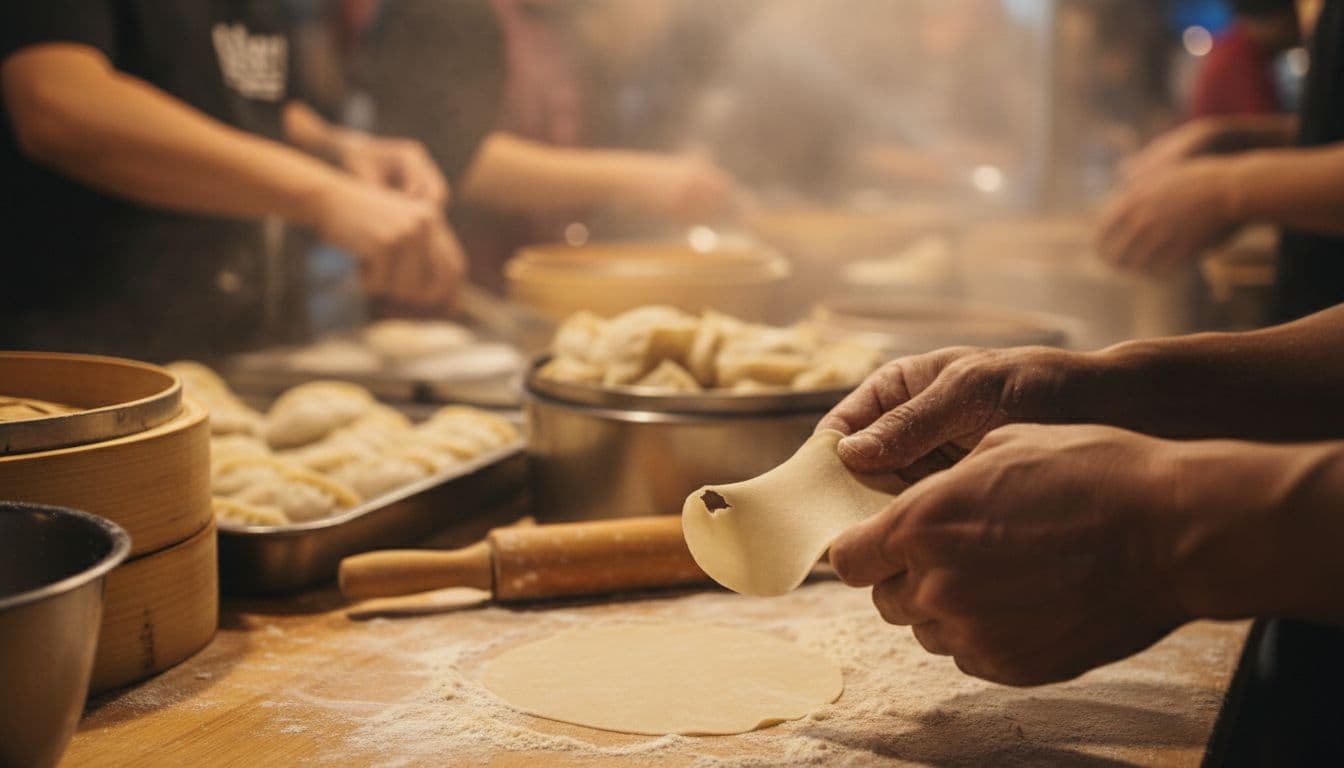
A stall cook rarely tosses a torn wrapper. Most of the time, they treat it like a small puncture in a tire: patch it, reinforce it, move on. These are common, practical fixes you’ll see at busy dumpling counters.
Patch with a dough “bandage.” A pea-sized bit of dough gets pressed over the tear, then flattened to match thickness. It’s fast, and once steamed, it blends in.
Shift the tear away from the seam. If the tear is near the rim, the cook might rotate the wrapper so the tear ends up under a thicker pleat cluster, not right on the closing line.
Reduce filling for that wrapper. Overfilling makes the dough act like a balloon. A slightly smaller scoop lowers pressure, and the dumpling cooks clean.
Flour, but not too much. A dusting keeps wrappers from sticking to the board, but heavy flour creates dry seams. Many stalls brush off excess before filling.
If you’re making dumplings at home, that same logic holds. The goal isn’t “perfect circles.” The goal is even strength where pressure will hit.
The filling steam problem (and why hot filling bursts seams)
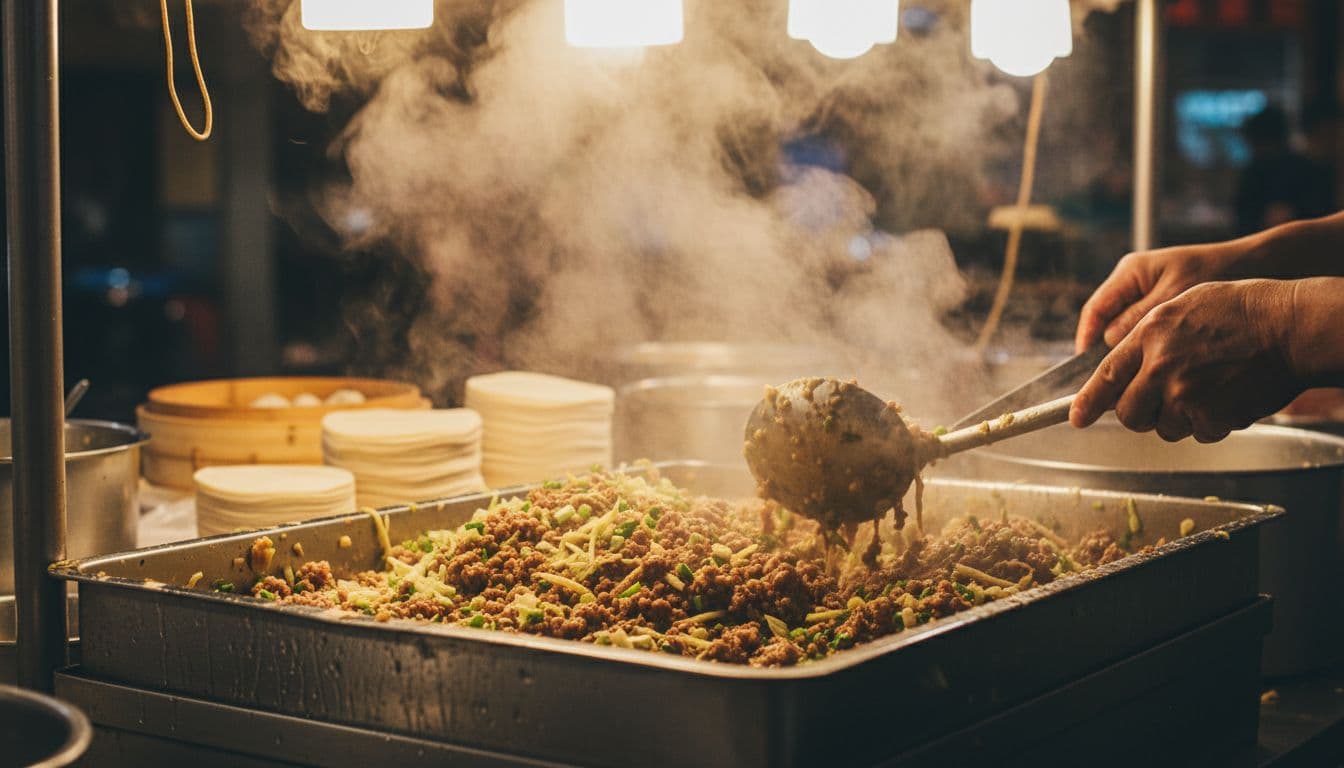
Steam isn’t only in the steamer. It starts inside the dumpling the moment hot filling hits a wrapper. That matters because steam expands, and expanding steam pushes on the weakest point, usually the seam or a thin patch.
Street stalls handle this in small, smart ways:
They vent the filling. You’ll see a cook spread filling on a metal tray, stirring and flattening it to release heat. It’s not about cooling it cold. It’s about stopping it from actively steaming while you wrap.
They watch for “wet shine.” Some fillings look glossy because fat is warm and liquid. That shine can turn into seepage during folding, which makes sealing harder.
They keep aromatics from “sweating” into the dough. Ingredients like cabbage, onion, and some herbs release water as they sit. If the mix looks puddled, cooks often strain, press, or mix in a dryer component before wrapping.
A quick traveler tip: when a stall is slammed and the filling pot sits right on high heat, you’ll see more rushed wraps. That’s when leaks happen. If you can, order a batch that’s already being wrapped, not one started from scratch with piping-hot filling.
Folding mechanics that hold under steam pressure
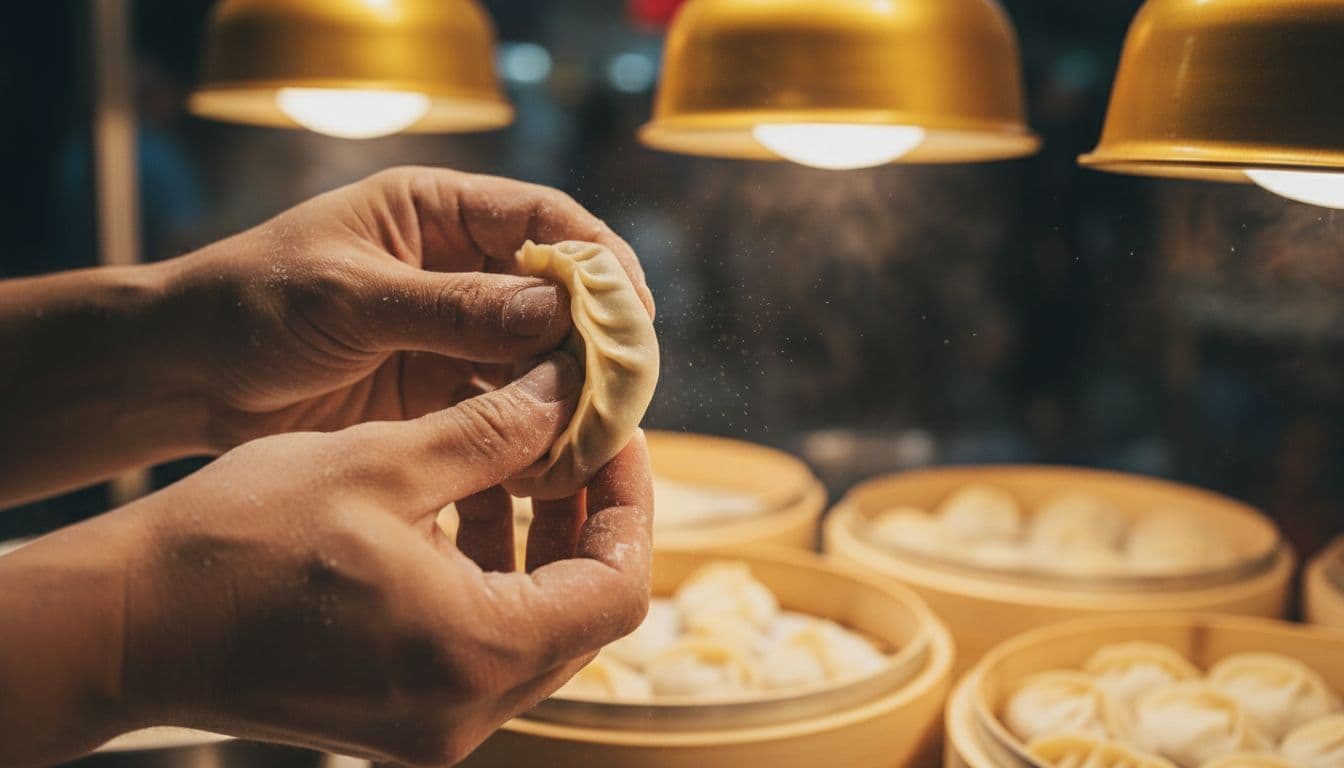
Pleats aren’t only decoration. They’re structure. A good fold is like a rope with twists: each pleat adds friction and thickness at the seam line.
A few stall habits make folds stronger:
Dry rim, clean rim. The rim should be free of filling. Even a smear can act like oil between two layers, stopping them from bonding.
Pinch pressure is targeted. Many beginners pinch the whole dumpling hard. Stall cooks pinch the seam line with short, firm presses. It’s less force overall, but more force where it counts.
Pleats stack in one direction. Consistent pleats create a thicker “spine.” Random pleats can leave gaps where two thin areas meet.
The last pinch is slow. You’ll notice speed until the final closure, then a deliberate pinch to lock it in. That last pinch often decides whether the dumpling survives boiling or pan-frying.
Fold tightness checks: the stall-side quality control
Before cooking, many vendors do tiny checks that look like fidgeting. They’re not fidgeting. They’re testing for leaks.
Here’s what those checks tell you, and the fast fix if something feels off:
| Quick check | What it reveals | Fast fix at the stall |
|---|---|---|
| Gentle squeeze near the belly | Air pockets or weak spots in the wrapper | Add one extra pleat, re-pinch the seam |
| Pinch-and-slide along the seam | Unsealed sections that will open in steam | Press seam with dry fingers, avoid water overload |
| Light tug on the “tail” or top knot | Whether the closure is actually fused | Re-fold the top and compress the knot |
This is also where you’ll spot the best vendors. They don’t wait for steam to expose mistakes. They catch them while the dough is still easy to correct.
Cooking is a stress test (steaming, boiling, pan-frying)
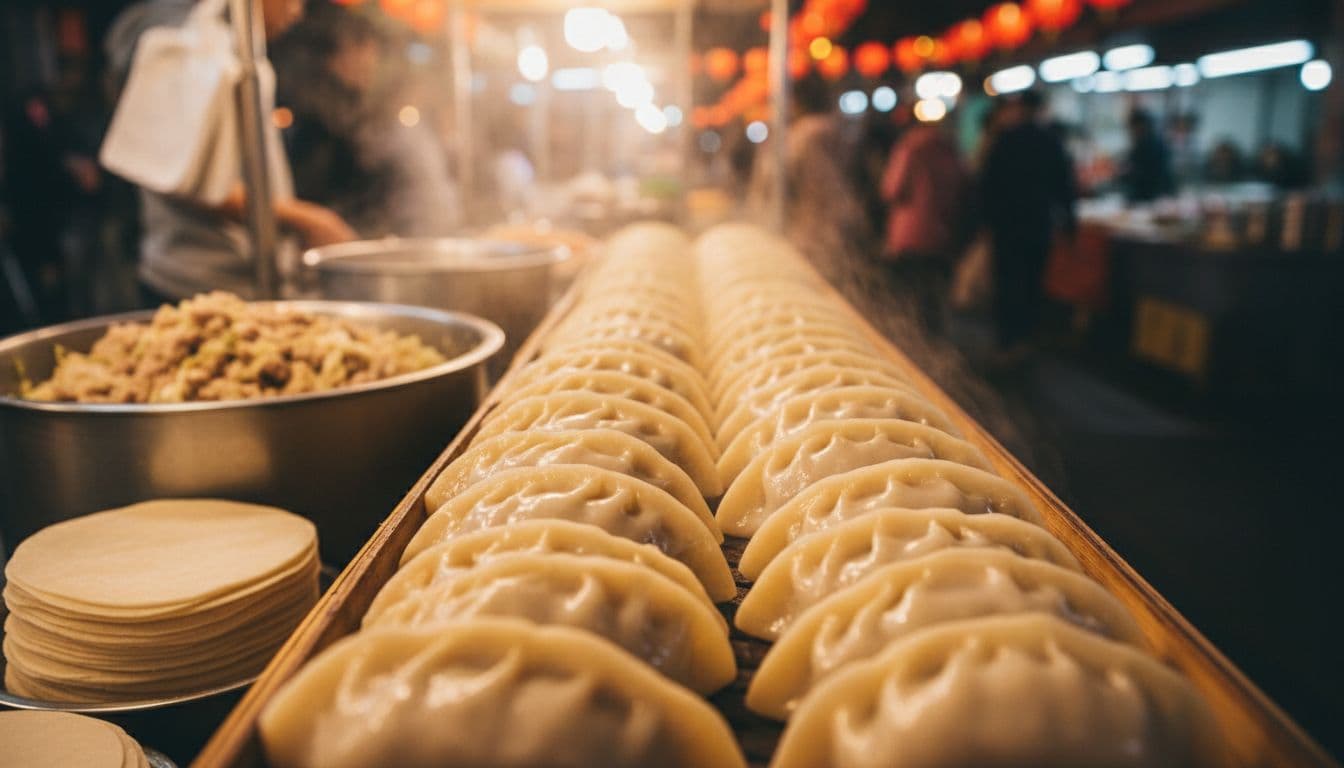
Different cooking methods punish different weaknesses.
Steaming expands the wrapper gently, but it amplifies thin spots. A torn area can widen, and filling moisture can creep out and glue dumplings to the basket.
Boiling is rougher. Dumplings bump each other, the water pulls on seams, and a small leak turns into a full split fast. Stalls that boil dumplings often seal more tightly and keep fillings slightly firmer.
Pan-frying adds a second risk: sticking. If a wrapper tears, the filling can caramelize onto the pan and rip the dumpling open when lifted.
As a customer, you can read the result. A good dumpling looks inflated but not bloated, pleats stay defined, and the wrapper has an even sheen, not bald patches where starch washed away.
How to spot (and order) well-made street dumplings
You don’t need to hover over the prep table. A few signals tell you whether the stall is doing the basics right.
Watch the wrapper stack. If wrappers sit covered (even with a cloth), edges stay workable. Uncovered stacks often mean dry rims and rushed sealing.
Listen for the rhythm. Smooth wrapping sounds like soft taps and short pinches, not frantic slaps. The cook’s pace can be fast, but it’s controlled.
Pick your first bite carefully. Bite the side, not the top knot. If there’s broth or hot fat inside, the side bite lets steam escape without blowing out the seam.
Check the tray for “leak stains.” A few stains happen everywhere, but a puddle of leaked juices under many dumplings is a pattern.
Conclusion
Street stall dumplings look simple, but they’re built on small decisions that happen in seconds. When you understand wrapper strength, filling steam, and that quick fold tightness check, you can taste the difference in every bite. Next time you’re at a busy counter, watch for the quiet moments: a patched tear, a filling cooled on a tray, a final pinch that doesn’t rush. That’s where dumpling wrapper tearing gets stopped before it starts.

Leave a Reply