
That spinning tower of meat looks like dinner and a show at the same time. But a shawarma or gyro spit is also a tricky way to cook, because the outside browns while the inside can stay raw.
If you eat street food often, you don’t need to become a food inspector. You just need a few reliable signs that the stall takes shawarma spit safety seriously. The best clues are visible, and they show up in three places: the shave order, the burner coverage, and what happens to the shaved meat after it’s cut.
This guide is written for curious eaters (and Street Food Blog regulars) who want practical, on-the-spot judgment calls without killing the fun.
Why shaved-meat spits are a special food-safety case
A vertical spit cooks from the outside in. That means the browned crust can look perfect even when deeper layers are still undercooked. When vendors shave meat, they are cutting cooked slices from the surface while the next layer is still cooking.
Public health agencies call out this exact risk in guidance for gyros and shawarma, including the Rhode Island Department of Health’s document on safe handling practices of gyros and shawarma. The core idea is simple: don’t let raw interior meat end up in the serving pile, and keep shaved meat hot enough to stay safe.
That’s why “it looks cooked” isn’t the best test here. Process matters.
Shave order: the safest stalls cut like they’re peeling an apple
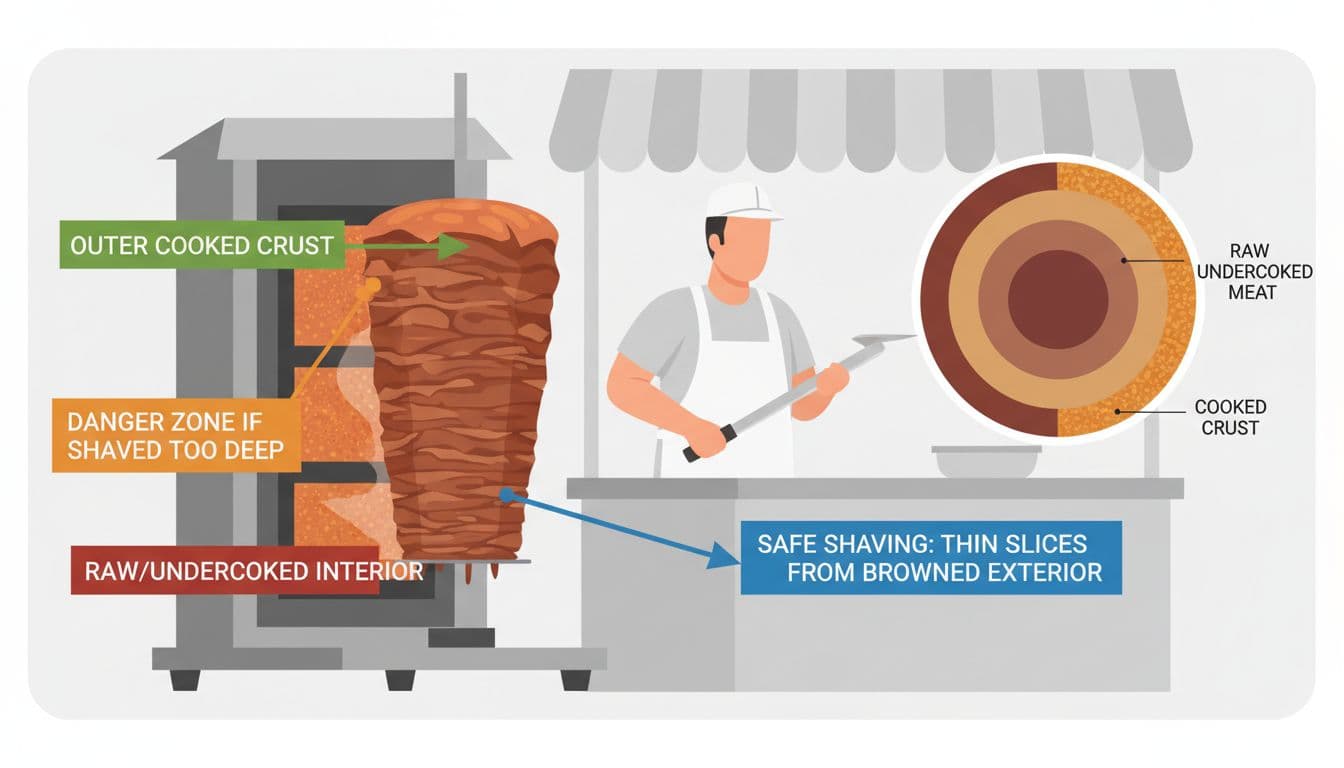
Think of a spit like a toasted marshmallow. The outside is done first. If someone scrapes too deep, they can bring raw meat to the surface in seconds.
What “good” shaving looks like
A careful vendor shaves thin slices from the browned exterior only. You’ll see a consistent rhythm: shave a bit, let the newly exposed layer face the heat, shave again.
You’re looking for:
- Thin, even shavings, not thick chunks
- A dry, browned surface before each pass
- The knife staying on the crust, not digging into pale layers
What “risky” shaving looks like
Some stalls carve like they’re trying to speed-run the line. That’s when safety can slip.
Red flags:
- They shave until you see pale, soft meat immediately going into the serving pile
- The knife scrapes deep enough that the exposed area looks wet or pinkish
- They shave a large patch, then keep shaving into the same spot without giving it time to re-brown
The tell that matters most: what happens after the shave
Many safer setups include a second cook step. That can mean tossing shaved meat onto a hot griddle, a flat-top, or a pan to finish heating through before it hits your wrap. This two-step approach is highlighted in guidance like the Eastern Ontario Health Unit’s guidelines for safe preparation of shawarmas and similar meat products.
If the vendor shaves and immediately does a quick sizzle on a hot surface, that’s a strong positive sign.
Burner coverage: even heat beats big flames
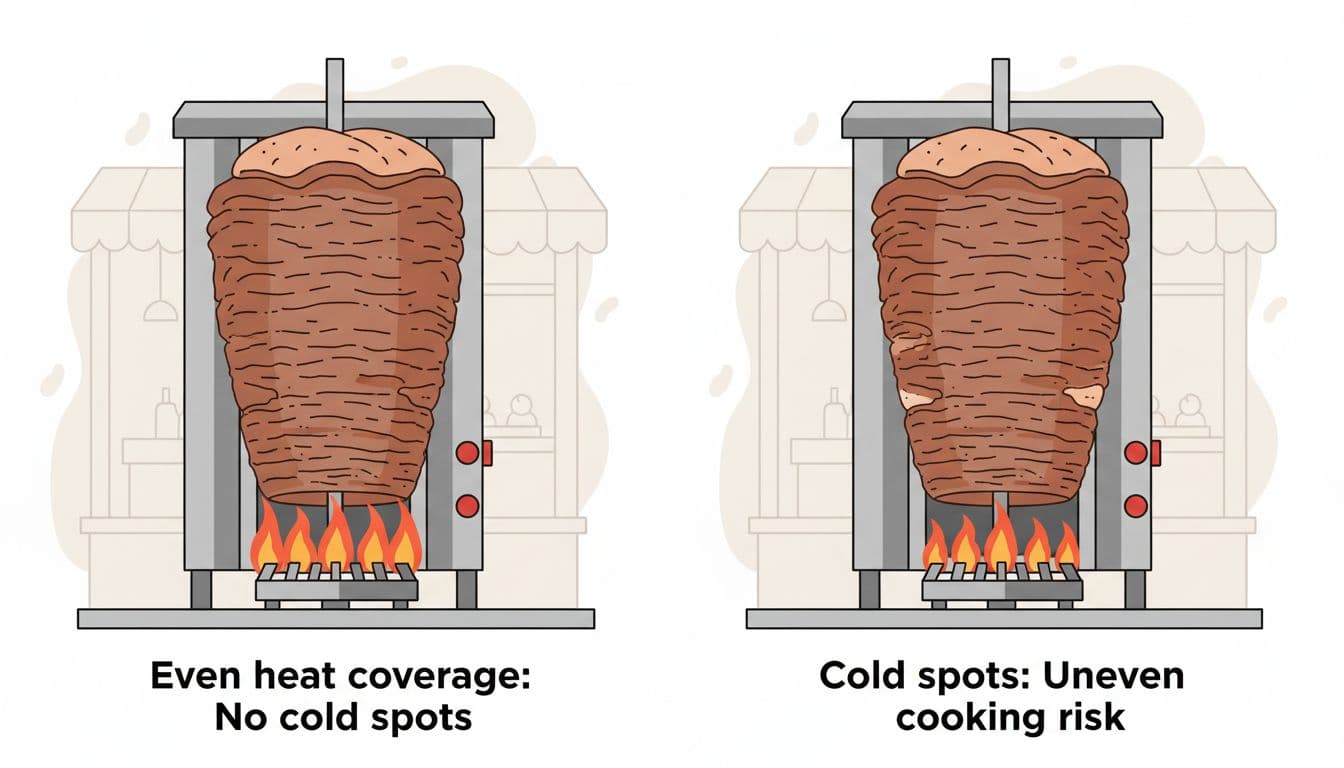
Big flames can look reassuring. But what you really want is coverage.
What to scan in 5 seconds
Stand where you can see the heat source and the face of the cone. Ask yourself: does the heat reach the area they’re shaving right now?
Good signs:
- The heating elements cover most of the spit height, or the spit is positioned so the shaving zone is clearly in the hot area
- The vendor adjusts the spit as it shrinks so the meat stays aligned with the heat
- The browning looks consistent, not striped or patchy
Riskier signs:
- Heat only hits the bottom third, while they shave higher up
- One side browns, the other side stays pale (a common “cold spot” pattern)
- Wind or stall layout pushes heat away, and the vendor doesn’t compensate
Why cold spots matter
Cold spots create a false sense of security. You see a browned edge and assume “cooked,” while another section is lagging behind. When that uneven area gets shaved into the tray, it can mix with hotter slices and cool them down too.
Holding trays: the quiet danger is lukewarm meat
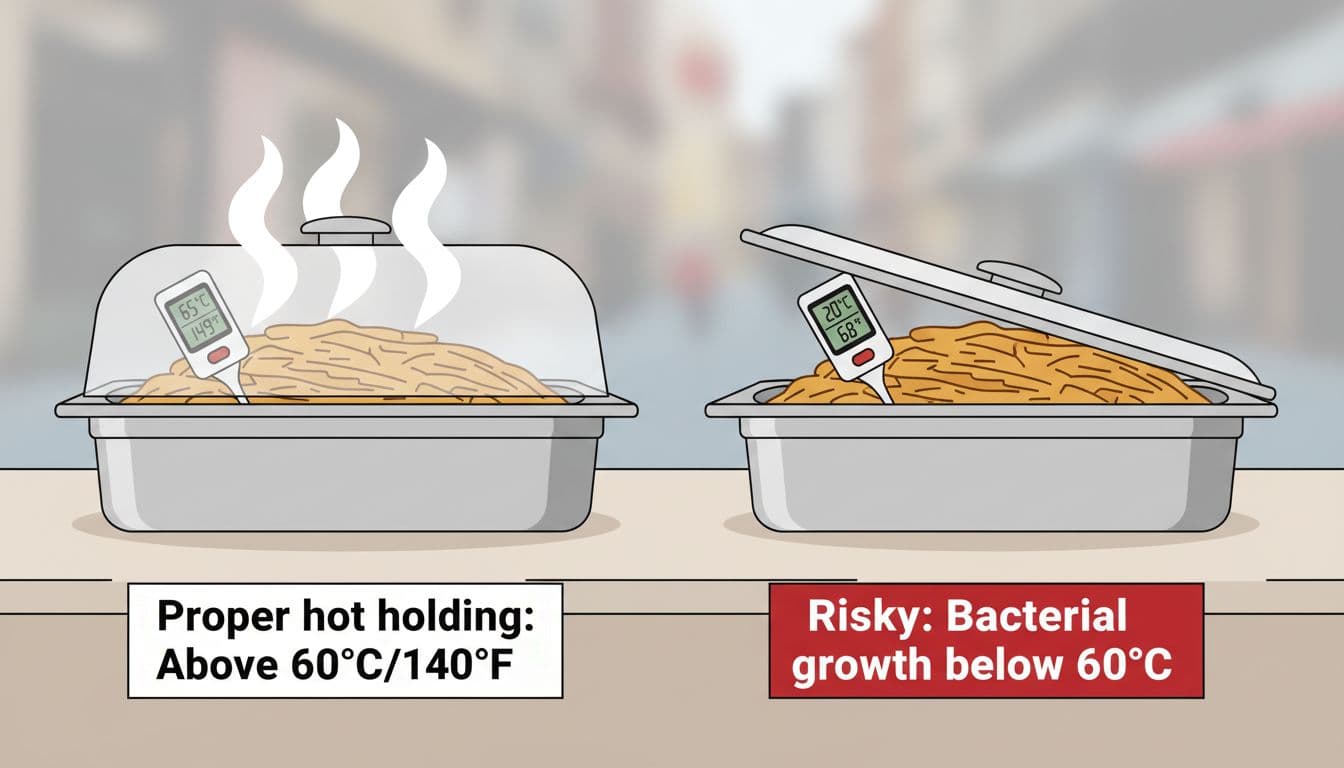
A lot of people focus on the spit and ignore the tray. The tray is where problems can multiply, especially during rushes.
What safe holding tends to look like
- Shaved meat goes straight to a hot surface (griddle, pan) or straight into the wrap
- If it’s held, it’s in a covered metal pan with visible steam or active heat beneath it
- The pile is small and turns over fast, not a mountain built for the next hour
What unsafe holding often looks like
- A wide, uncovered tray sitting at room temp, slowly drying at the edges
- Meat held near the spit only because it’s nearby, not because it’s actually hot
- Large batches shaved ahead “to get ready,” then served from the tray
Many food safety rules use a hot-holding threshold above 60°C (140°F), and you’ll see this referenced in documents such as Alberta Health Services’ requirements for the preparation and serving of donairs, shawarmas and similar products. You don’t need to measure it as a customer, but you can spot the difference between steaming-hot and just-warm.
A quick street checklist you can actually use
| What you notice at the stall | What it suggests | What you can do |
|---|---|---|
| Thin slices from a browned crust | Better control of doneness | Order with confidence |
| Deep carving into pale layers | Higher chance of undercooked bits | Choose another stall |
| Even browning where they shave | Heat is reaching the action zone | Watch for consistency |
| Patchy browning, pale bands | Cold spots, uneven cook | Ask for a quick griddle finish |
| Covered, hot, steaming holding pan | Hot holding is likely maintained | Prefer meat from the hot pan |
| Big uncovered tray, lukewarm pile | Time and temperature risk | Ask for meat shaved fresh |
Smart ordering moves that don’t offend the vendor
You can protect yourself without making it awkward.
- Order “fresh shaved” when the stall is quiet. During a rush, watch whether “fresh” still means “from the tray.”
- Ask for it finished on the grill if you see any pale shaving. Many vendors already do this for flavor, so it sounds normal.
- Skip stalls with giant pre-shaved piles. Fast service is great, but not when it comes from long holding time.
- If you’re choosing chicken, be stricter. Poultry has less forgiveness than lamb or beef when it comes to undercooking.
Common misconceptions that lead people astray
“If the outside is charred, it’s safe.”
Char can hide uneven cooking. The interior can still be underheated.
“The spit is hot, so the tray must be hot too.”
Heat doesn’t travel by wishful thinking. Trays need their own heat source or quick turnover.
“Busy stalls are always safer.”
High turnover helps, but a busy stall can also shave too deep to keep up. Watch the technique, not the crowd.
Conclusion: watch the process, not just the color
A great street shawarma or gyro should taste like spice, smoke, and crisp edges, not like a gamble. When you judge shawarma spit safety by shave order, burner coverage, and holding trays, you’re reading the stall’s habits in real time.
Next time you’re deciding where to queue, take ten seconds to watch the cut, the heat, and the tray. Your best meal stories should come from flavor and travel, not from spending the next day regretting a “quick bite.”


Leave a Reply