
You are hungry, the grill is sizzling, and the air smells like fried heaven. Then you catch a glimpse of the fryer and the oil looks… tired. Do you risk it or walk away?
Street food should be fun, not stressful. But reused cooking oil can turn a dream snack into a stomach problem in no time.
This quick guide shows you how to judge frying oil in under 30 seconds using simple checks for color, smoke, bubbles, and smell, so you can eat with confidence at any market on earth.
Why Reused Cooking Oil Is A Real Problem For Street Food Lovers
Long, repeated heating changes the structure of oil. It starts to break down, picks up food particles, and builds up compounds that are hard on your body.
A 2022 report on the reuse of cooking oil in street food vending in Tamil Nadu found that many vendors top up old oil instead of changing it. That habit saves money but raises the risk of rancidity and harmful byproducts.
Research in the Nigerian Journal of Nutritional Sciences on repetitive use of frying oil links heavy reuse to higher levels of oxidized fats and degraded flavor. In simple terms, the oil turns sticky, smoky, and harsh.
In some extreme cases, like gutter oil scandals in China, people have even recycled waste oil from drains and trash. You will not see this in every market, but it shows how far bad oil practices can go.
You do not need a lab or test kit to protect yourself. Your eyes, nose, and a half-minute of attention are enough to spot most risky stalls.
Your 30-Second Checklist For Spotting Reused Cooking Oil
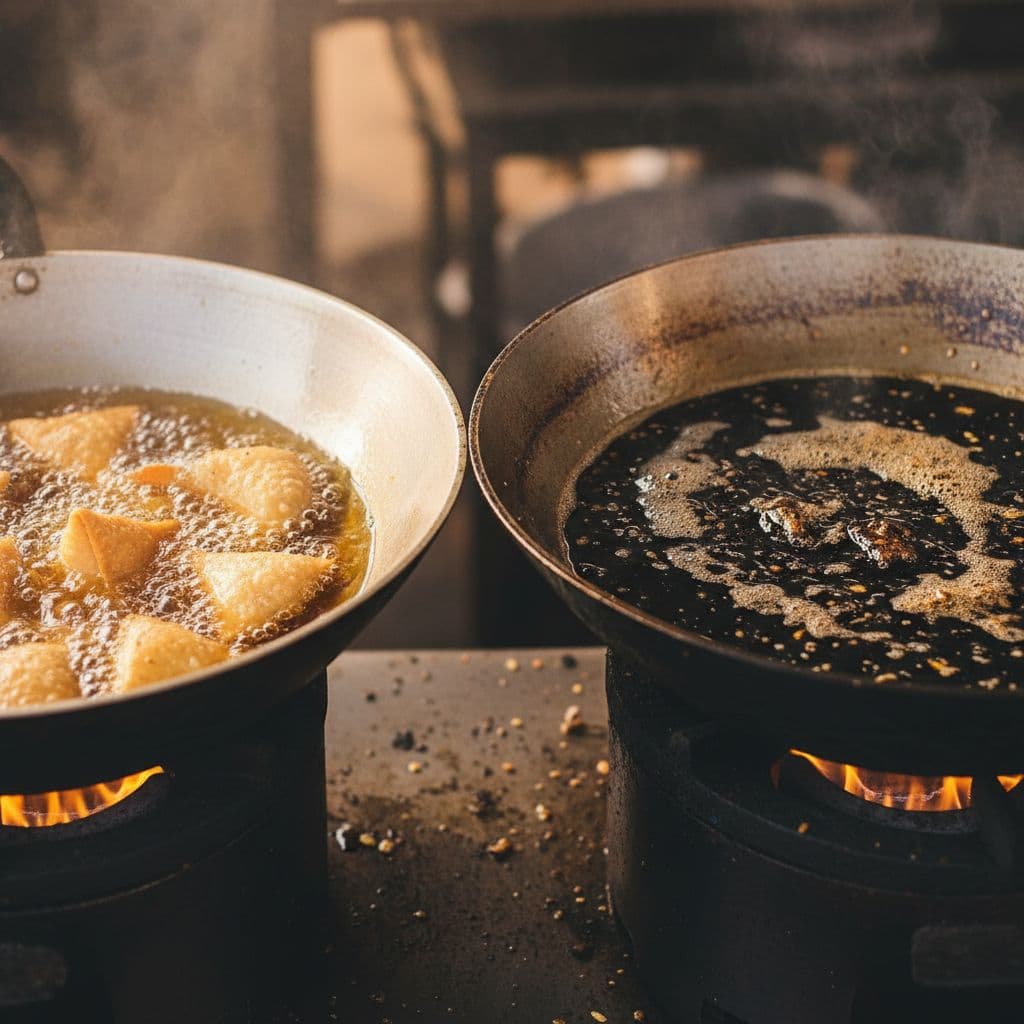
Close-up look at fresh versus reused frying oil at neighboring stalls. Image created with AI.
Think of this as a speed check, like glancing at traffic before crossing the road. You can run through it while you stand in line.
Step 1: Scan The Color (about 5 seconds)
Fresh oil is usually:
- Pale yellow or light golden
- Clear enough that you can see the bottom of the pan
Reused cooking oil often looks:
- Dark gold, brown, or almost black
- Cloudy, with a muddy or streaky look
If the oil looks like strong black tea instead of light beer, that is your first warning.
Step 2: Look At The Smoke (about 5 seconds)
A little steam is normal. Thick smoke is not.
Fresh oil at the right temperature will shimmer and bubble gently around the food, with almost no visible smoke. Reused cooking oil smokes earlier and more heavily because its smoke point has dropped.
Red flags:
- Blue-white smoke rising even when the stall is not crazy busy
- A sharp, biting smell that stings your nose or eyes
If you can smell burnt oil before you even reach the counter, move on.
Step 3: Watch The Bubbles And Foam (about 10 seconds)
Take a second to watch one batch of food from drop to finish.
In a clean fryer:
- Bubbles are small and lively around the food
- The oil settles quickly once the batch comes out
- There is little or no foam sitting on top
With reused cooking oil:
- Thick, clingy foam builds up and lingers on the surface
- Bubbles may look big, slow, or uneven
- You might see brown scum or crumbs floating everywhere
A study on street food fryer influences on frying oil quality shows that heavy foaming and dark particles are classic signs of worn-out oil. You can spot both just by watching the wok for a few seconds.
Step 4: Check The Food Coming Out Of The Oil (about 5 seconds)
You do not even need to buy anything yet. Just look at what other people receive.
Good signs:
- Even golden color
- Crisp, dry-looking surface
- Light, toasty smell
Bad signs:
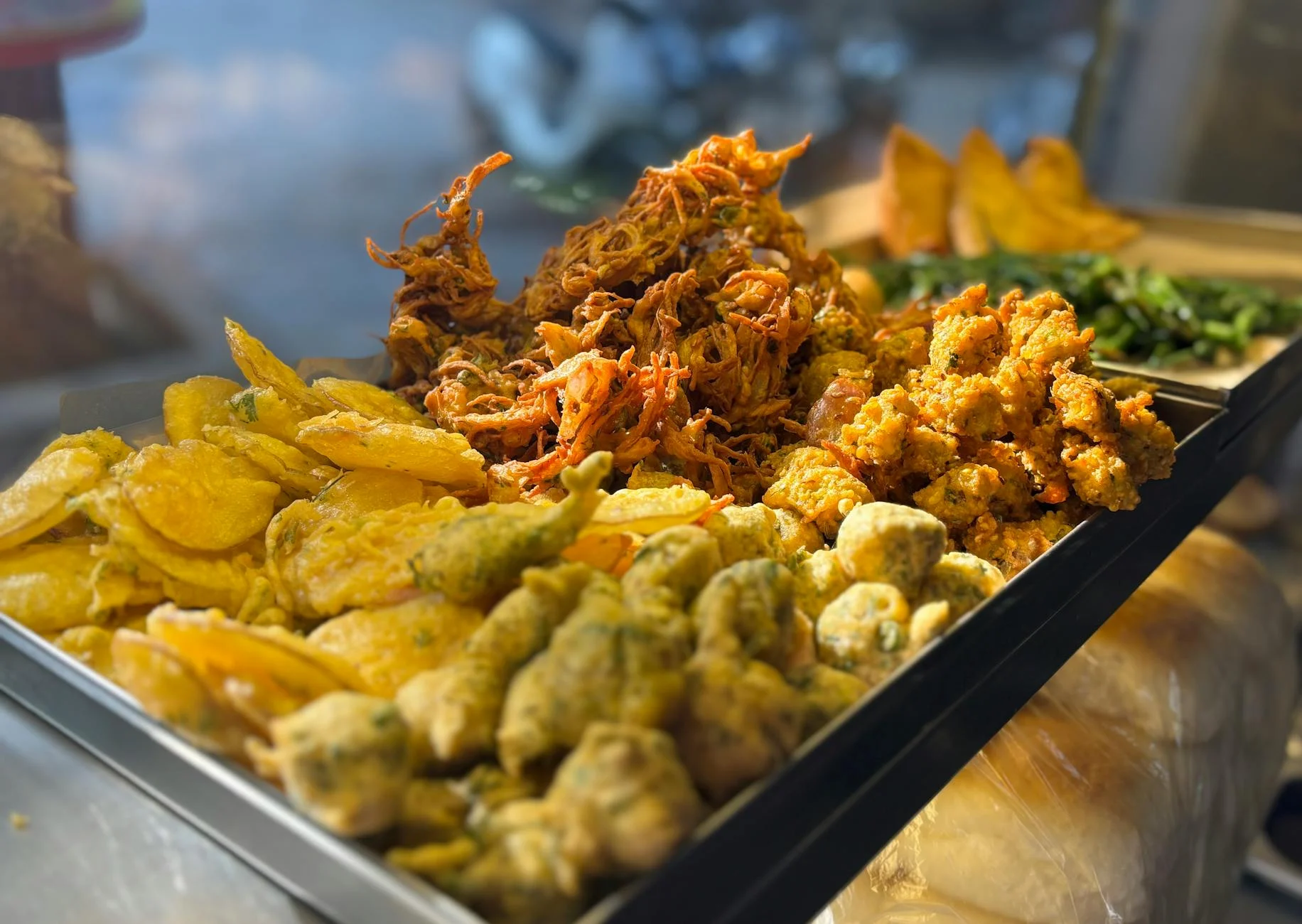
- Very dark or almost black patches on fries, pakoras, or fritters
- Oily shine that drips instead of a crisp finish
- Strong burned or stale odor
If the food looks heavy and wet rather than crisp, the oil is probably tired.
Step 5: Quick Stall Hygiene Scan (about 5 seconds)
Finally, glance around the fryer and work area.
Warning signs include:
- Crusty black build-up on the pan or wok edges
- Old oil cans or bottles sitting open and sticky
- No sieve or strainer in sight to remove crumbs
- Oil that never seems to be changed, only topped up
Clean stalls are not perfect by default, but a tidy frying area usually means the cook pays attention to freshness too.
Put all of this together and you have a fast, practical filter. In less than half a minute you can decide whether to stay or find a better snack.
Fresh Oil Vs Reused Oil: A Quick Side‑By‑Side
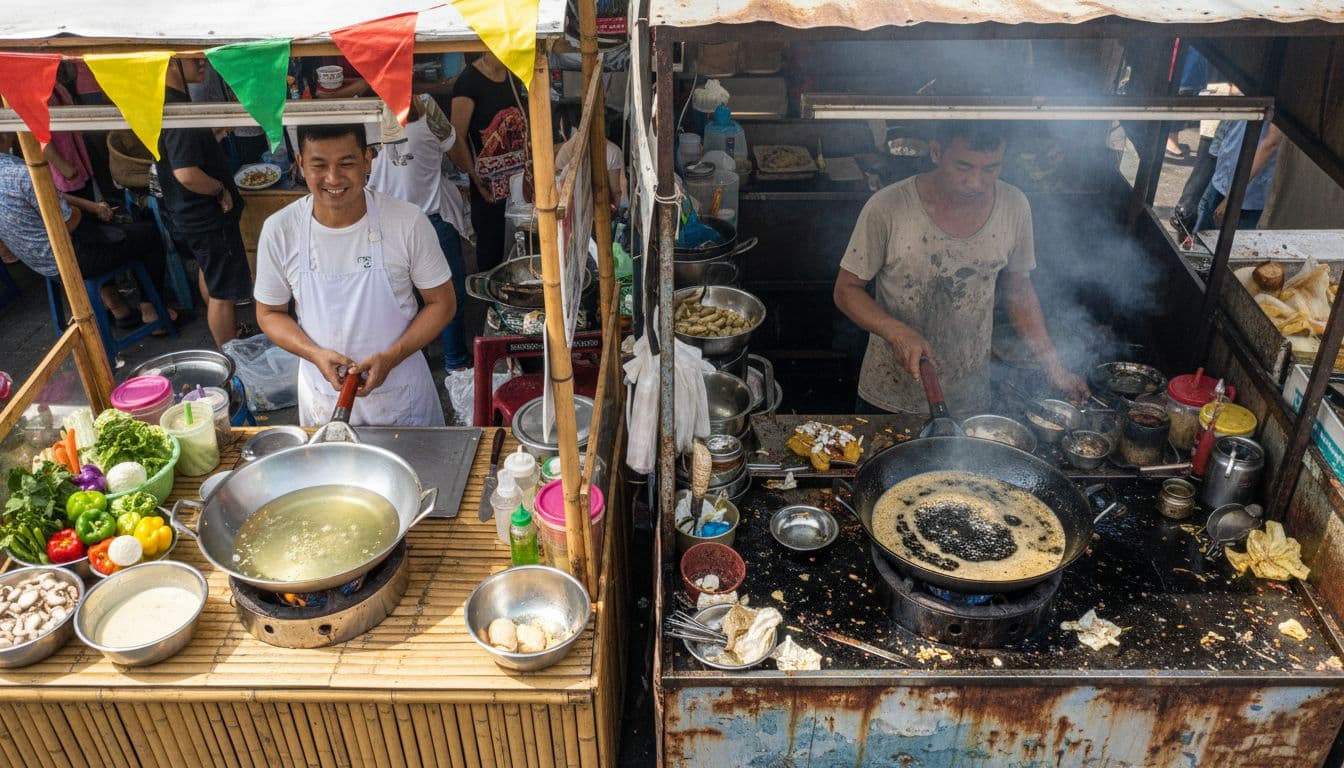
Two neighboring stalls, one using fresh oil and one using reused cooking oil. Image created with AI.
Here is a simple cheat sheet you can keep in your head while you travel.
| Sign | Fresh oil looks like | Reused cooking oil looks like |
|---|---|---|
| Color | Pale yellow, light gold, clear | Dark gold, brown, or nearly black, cloudy |
| Smoke at frying heat | Little to no smoke | Visible smoke rising, sharp or burnt smell |
| Surface during frying | Small, even bubbles, settles after each fry | Thick foam, big sluggish bubbles, scum that never clears |
| Food texture and color | Evenly golden, crisp, not greasy | Patchy dark spots, limp texture, greasy surface |
You do not need to see every sign. Even one or two strong red flags are enough reason to look for another stall.
What To Do If The Oil Looks Suspicious

A clean, high‑turnover fryer using fresh oil at a busy night market. Image created with AI.
You never have to justify walking away from a stall. Your health and your trip matter more than one plate of food.
Good options if the fryer looks risky:
- Choose a stall that grills, steams, or boils instead of deep-fries
- Look for a busy vendor who is constantly frying fresh batches
- Watch one full cycle of frying before you join the line
- Pick items that are cooked to order, not sitting in old oil
On Street Food Blog, we pay close attention to how stalls treat their oil when we scout markets and write guides. You can do the same in real life, just in a much quicker way.
If you are curious about how bad oil practices can get, reading about gutter oil recycling scandals is a strong reminder to trust your senses.
Conclusion: Trust Your Senses, Not The Queue
The longest line does not always mean the safest food. Your eyes, nose, and a simple 30‑second scan are enough to spot reused cooking oil at most street food stalls.
Remember the basics: color, smoke, bubbles, the look of the food, and the state of the fryer. Once you practice this a few times, it becomes as natural as checking change after you pay.
Use these checks on your next market walk, eat where the oil looks fresh and alive, and keep street food the joy it should be.





Leave a Reply