
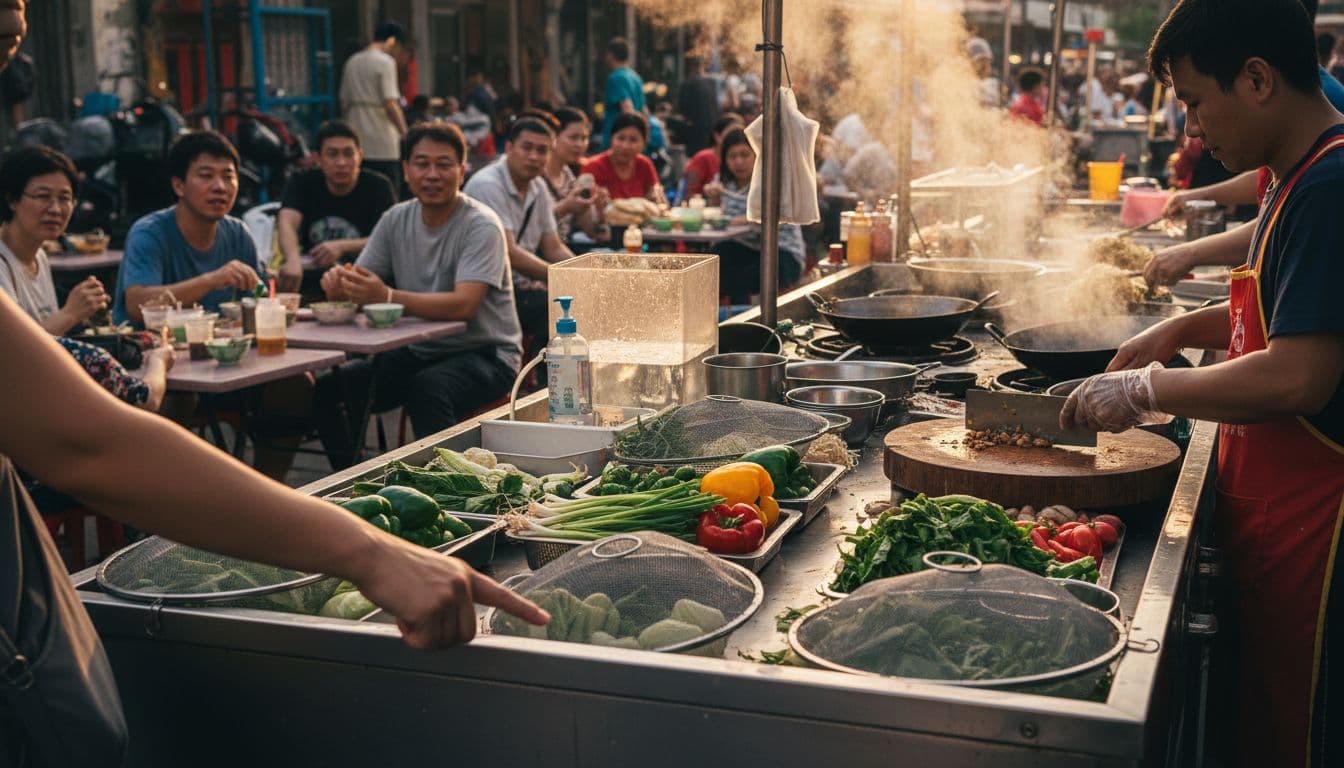
How To Read a Street Food Stall in 10 Seconds (And Spot Red Flags Fast)
You spot a busy cart, smell charcoal and garlic, and your stomach says yes. But your brain whispers, “Will this land me in bed tomorrow?”
A quick visual scan can answer that faster than any review app. With a 10-second routine, you can protect your health, still taste bold flavors, and skip the regret.
This guide breaks down a simple way to read any stall fast, so you can enjoy street food safety without losing the fun that brought you there in the first place. Street Food Blog lives for that balance: big flavor, smart choices.
The 10-Second Stall Scan: Start With The Big Picture- How To Read a Street Food Stall in 10 Seconds
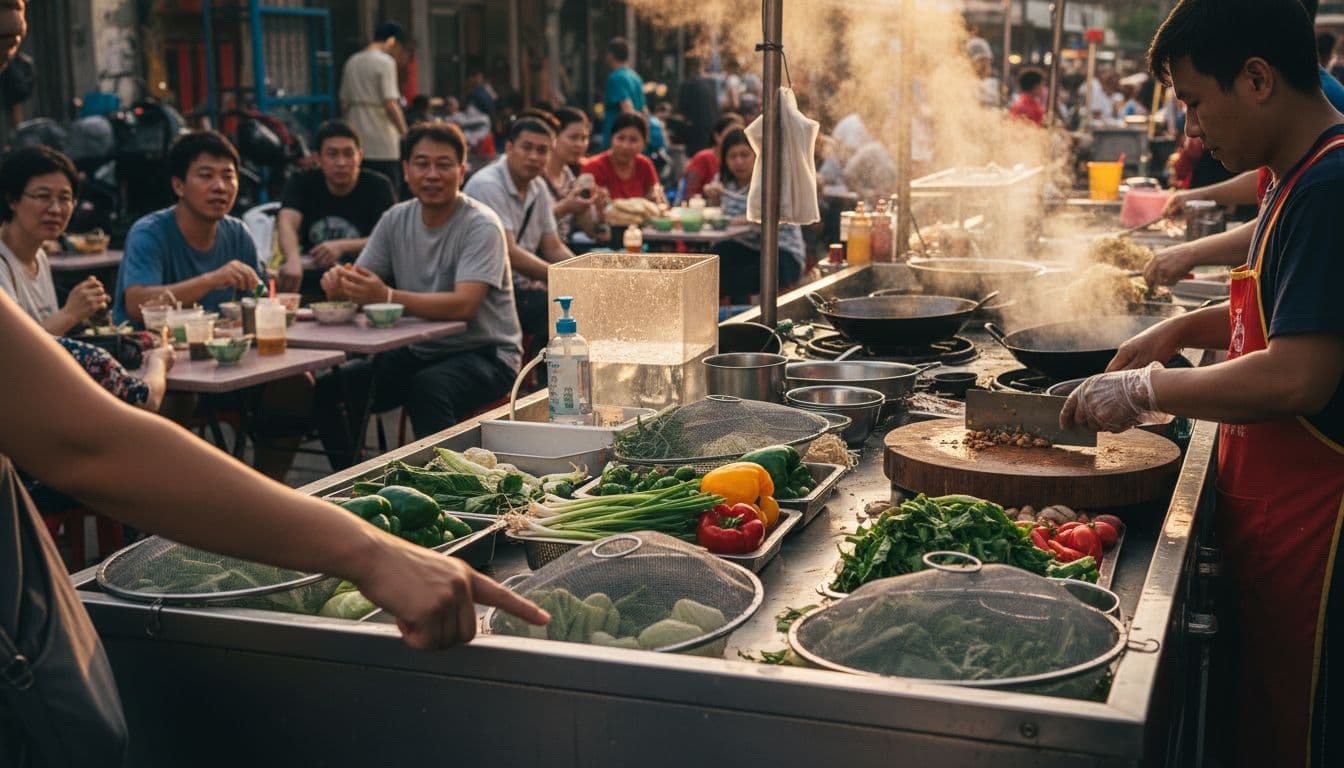
Traveler quickly checking a clean and busy street food stall at dusk, image created with AI.
Your first second belongs to the surroundings. Look at where the stall is parked. Is it near piles of rubbish, open drains, or standing water, or is it on a cleaner, well-used corner with other food sellers and families hanging around? How To Read a Street Food Stall in 10 Seconds
Next, look at the stall layout. A tidy stall usually means a tidy process. You want to see separate zones for raw and cooked food, a clear grill or wok area, and tools stored in one place, not scattered on random surfaces.
Then glance at the staff. Do they move with a clear routine, or do they look lost and overwhelmed? A calm, fast vendor who repeats the same steps each order is often a sign of practiced street food safety.
Crowd Clues And Turnover: Who Is Eating Here?
Crowds do not guarantee safety, but they are a strong hint. A steady line of locals, especially at peak meal times, usually means high turnover and fresh batches leaving the grill or fryer.
Pay attention to who is in that line. Families, kids in school uniforms, or office workers on lunch break often choose stalls that feel reliable. If people who live nearby eat there often, that is good information for you.
The opposite matters too. If the area is busy but the stall is empty, and plates of cooked food are sitting there untouched, give yourself permission to walk on. Your stomach can wait for the next cart.
Hands, Tools, And Surfaces: Hygiene On Display
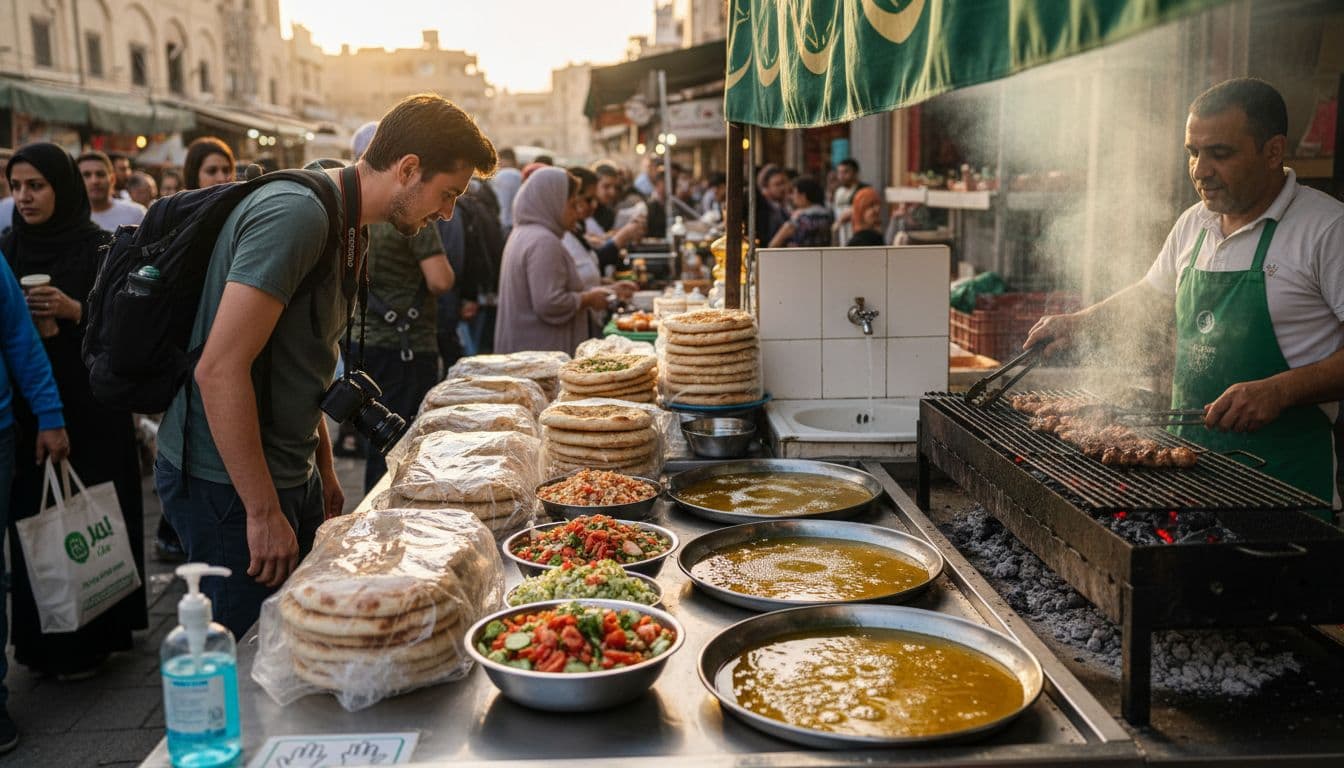
Vendor handling food with tongs at a clean street food stall, image created with AI.
Treat your eyes like your first taste buds. Watch what touches your food. Clean tools are your friends: tongs, ladles, spatulas, and knives that look well used but not greasy or sticky.
Gloves are only helpful if used correctly. A vendor wearing the same pair to handle raw meat, cooked food, and money is not helping you. In that case, bare clean hands that are washed often are safer than dirty gloves.
Check the main surfaces. The cutting board should not be black with old stains. The counter should look wiped, not shiny with old oil. Bonus points if you can see a small bucket of soapy water, a handwashing sink, or paper towels within reach.
Food, Oil, And Smoke: Signs Of Freshness Or Trouble
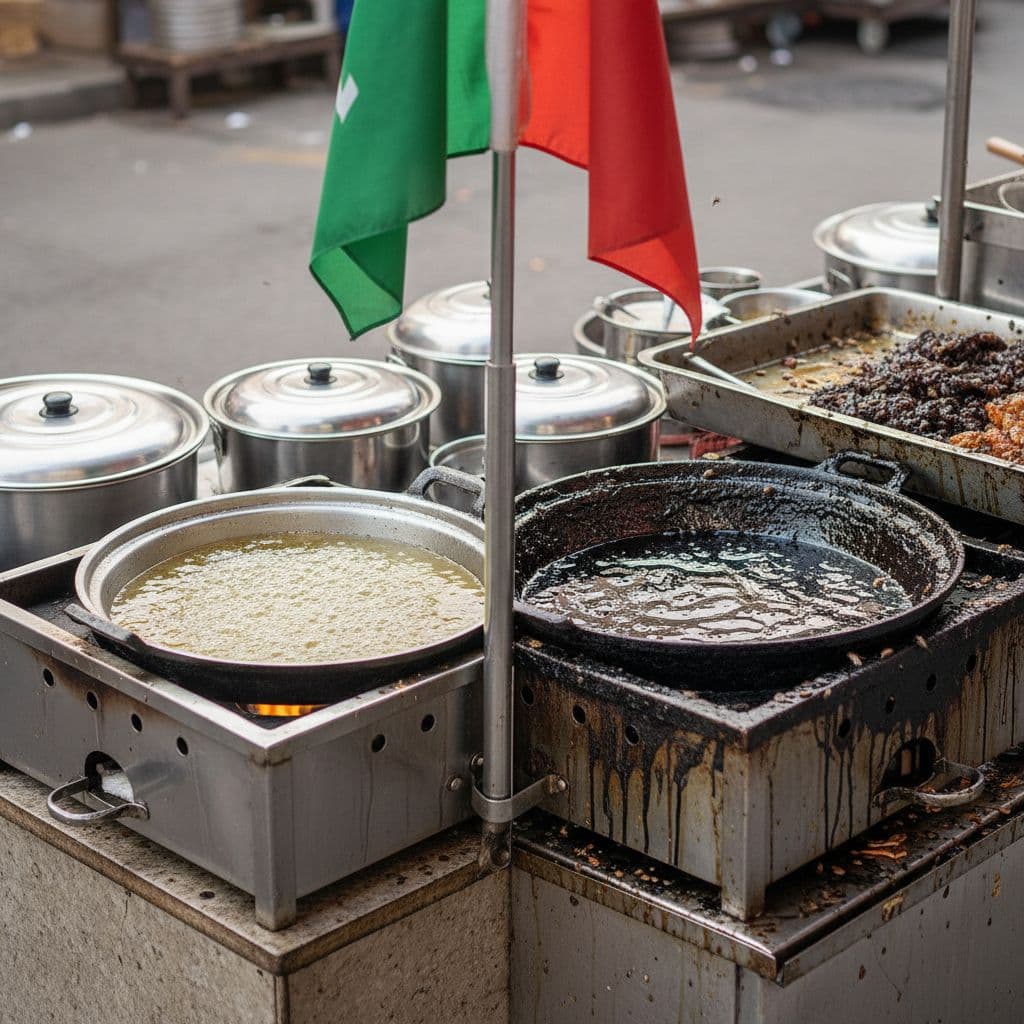
Close-up comparison of clean and dirty cooking equipment and oil at a street food stall, image created with AI.
Oil tells stories. Fresh oil is light in color and smells pleasant or neutral. bad oil is dark brown or almost black, smells burnt, and may look foamy or thick. If fries or fritters come out heavy and greasy, the oil has probably had a long day.
Look at how raw ingredients are stored. Vegetables stacked in clean trays or bins are fine. Raw meat sweating on a table in full sun is not. Even in hot countries, many good vendors keep meat chilled in coolers, on ice, or in shaded boxes.
Watch the smoke. A bit of charcoal smoke is normal and even tasty. Constant heavy smoke and flare-ups from dripping fat can mean poor control of heat and worn-out grills that are hard to clean well.
Heat, Storage, And Cross-Contamination Red Flags
Good heat is your strongest ally in street food safety. Food should be cooked to order, or at least re-heated until it is piping hot, not just warm. Lukewarm stews or skewers that were grilled long ago and left out are a common way people get sick.
Scan for cross-contamination. If raw chicken and ready-to-eat salad share the same cutting board or the same knife without a wash in between, move on. The same goes for tongs used on raw seafood and then on cooked items.
Covers protect your plate before it exists. Pots with lids, display cases with glass, and trays with mesh covers all help keep flies away. Bare piles of rice or meat in the open air, with insects moving around, are a clear red flag.
Your 10-Second Street Food Safety Checklist
You will not remember every detail in the moment, so keep a simple mental list. When you walk up to a new stall, run through these quick checks:
- Area around the stall looks reasonably clean
- Locals are eating there, and food is moving fast
- Stall setup is tidy, with raw and cooked food separated
- Vendor uses clean tools and washes hands or changes tasks smartly
- Oil looks clear, not dark and burnt
- Food is cooked or reheated until steaming hot
- Flies, rubbish, and standing water are kept away from the food
You do not need a perfect score, but too many bad signs in a row mean you should trust your gut and keep walking. Street Food Blog always encourages taste, not risk.
Final Bite
Street food should be exciting, not a gamble. With a simple 10-second scan, you can turn random guesses into fast, clear decisions and build your own sense of street food safety wherever you travel. How To Read a Street Food Stall in 10 Seconds
Next time you step up to a cart, let your eyes run through this checklist before your mouth places the order. You will enjoy more great meals, skip most of the bad ones, and feel a lot more confident in every market you explore.

Leave a Reply