
Street markets can be paradise for food lovers. Spices in the air, grills smoking, vendors calling out orders. If you live gluten free, that same scene can feel like a minefield.
For people with celiac disease or strong gluten sensitivity, a crumb is not “no big deal”. It can mean pain, brain fog, or days lost from a trip. Learning to spot hidden gluten and cross-contact fast turns panic into confidence.
This guide breaks down how to scan any stall in seconds so you can enjoy gluten free street food with a clear head, the way travelers and eaters do on Street Food Blog.
Why Gluten Free Street Food Can Be Risky
Gluten in street food is not just about the recipe. The real problem is where and how the food is cooked.
A corn tortilla might be naturally gluten free, but if it hits the same grill as wheat flatbreads, it can pick up enough gluten to cause a reaction. The same thing happens when fries share oil with breaded chicken, or when a knife moves from a pita to your “gluten free” skewer.
Research backs up these worries. In the United States, testing by Columbia University found that about one-third of restaurant dishes labeled gluten free still contained gluten. Another analysis in the American Journal of Gastroenterology looked at gluten contamination of restaurant food and showed how common small mistakes can be.
Street kitchens often have:
- Tiny work spaces with shared grills, boards, and tongs
- One fryer for everything, from battered snacks to fries
- Fast, high-pressure service where staff reuse tools
You are not asking for anything “fancy” when you ask for safe gluten free street food. You are asking for basic food safety.
Quick Visual Red Flags At Any Stall
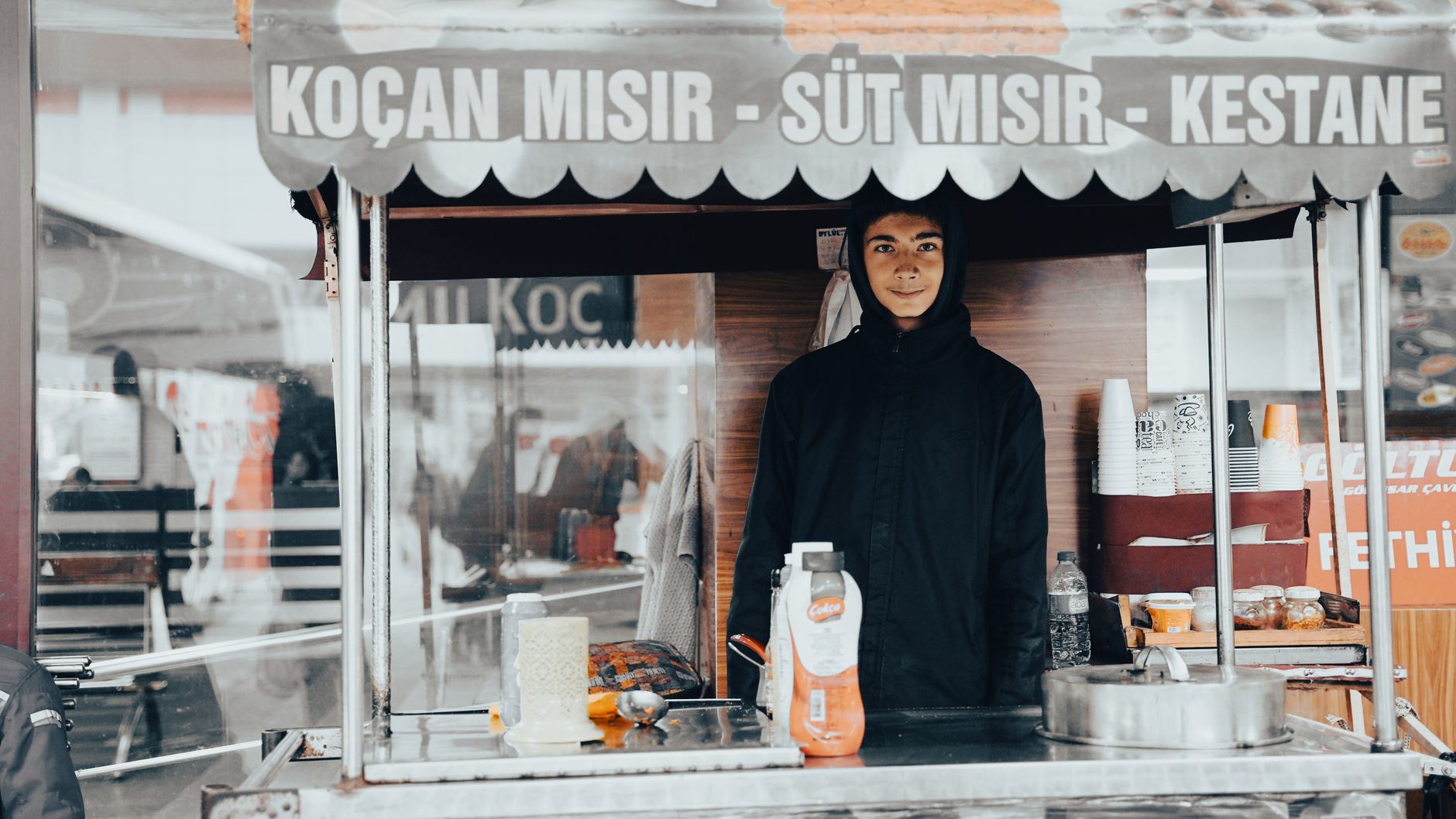
Photo by SERHAT TURAN
Before you talk to the vendor, take ten seconds to scan the set-up. Think of it like reading the “body language” of the kitchen.
Watch the fryer.
If you see battered foods and fries in the same oil, that oil is not safe. Wheat from the batter stays in the oil and coats everything, even simple potatoes.
Check the grill or plancha.
Look for:
- Flatbreads, buns, or seitan next to meat or vegetables
- Pancake-like batter poured where your food will go
- Thick crumbs stuck on the grate
If the grill is covered with bread or batter residue, your food will not be gluten free, even if the ingredients are.
Look at the prep board.
Many stalls use one chopping board for everything. If you see the same board used for sandwiches, wraps, and your salad or fruit, that is a risk. Bread crumbs wedge into knife grooves and board scratches.
Notice the utensils.
Shared tongs, knives, and ladles are one of the fastest ways gluten jumps onto otherwise safe food. If the tongs that grab your grilled corn also grab pita pockets, you are not safe.
A quick visual scan can save you from a longer, awkward talk at a stall that clearly cannot keep your food separate.
Smart Questions To Ask The Vendor
Once a stall passes the eye test, talk to the vendor. Short, direct questions work best, especially if you do not share a language.
You can:
- Start with, “I cannot eat wheat or flour, even a little. Is that ok?”
- Point to food and ask, “Cooked only here?” while showing the grill or pan.
- Ask, “Separate oil for this?” and point to the fryer.
If you have celiac disease, a translated allergy card helps a lot. Many travelers keep one on their phone in the local language.
Medical groups like the Celiac Center at Beth Israel Deaconess Medical Center outline how cross-contamination with gluten happens through shared tools and surfaces. Use that knowledge to guide your questions: grill, oil, cutting areas, and toppings.
If the vendor hesitates, looks unsure, or answers “yes” to everything too fast, treat that as an answer. A clear “no, we cannot keep it separate” is far safer than a rushed “yes, of course”.
High-Risk Foods vs Safer Bets
Not all street food carries the same risk. Some dishes are naturally higher risk because they rely on shared oil, batter, or bread.
Here is a quick cheat sheet.
| Often Higher Risk | Often Safer Choices (If Prepared Separately) |
|---|---|
| Deep-fried snacks in shared oil | Grilled corn on the cob |
| Breaded meats and seafood | Fresh fruit cups or fruit on sticks |
| Sandwiches, wraps, and stuffed breads | Plain grilled meat, fish, or tofu |
| Sauces thickened with roux or soy sauce | Steamed rice, plain potatoes, or corn tortillas |
| Noodles from mixed woks or pans | Salads mixed in a clean bowl in front of you |
Even in the “safer” column, you still need that fast visual scan and a short chat. A plain grilled chicken skewer sounds safe, but not if it sits under a pile of flatbreads.
Academic reviews on handling practices, such as the mini-review on gluten cross-contamination risk, highlight just how many surfaces and tools carry residue. Keeping this in mind helps you judge each food option more clearly.
Fast Personal Safety Checks Before You Eat
You looked, you asked, you ordered. Before you take that first bite, pause for five more seconds.
Run through this mental checklist:
1. Do you see surprise bread or crumbs?
Sometimes staff add a bonus topping without thinking. Croutons on soup, bread on a plate, or a wheat tortilla under your kebab. If you see any bread, trade the plate back with a smile and ask for a fresh one.
2. Did your food touch the counter?
If the plate looks clean but the food sat on a crumb-covered counter first, it is safer to skip it.
3. Does the sauce look thick and cloudy?
In many cuisines, roux or wheat flour thickens sauces and gravies. When in doubt, keep it plain and use salt, lemon, or chili instead.
4. Do you feel unsure in your gut?
Your instincts matter. If something feels off, you owe the vendor nothing. Thank them, walk away, and grab a packaged snack you trust.
Reviews on gluten-free product safety, such as the narrative review of cross-contamination in gluten-free foods, show how even careful kitchens can slip. You protect yourself by building habits that catch those slips before they reach your mouth.
It also helps to:
- Carry a small “emergency kit” of safe nuts, bars, or rice cakes
- Pack digestive meds and your usual support tools if you react
- Share your plan with travel friends so they know what you need
Bringing It All Together On The Road
Street food should be fun, not a constant stress test. With a sharp eye, a few clear questions, and a simple checklist, you can enjoy gluten free street food in many markets without gambling with your health.
Street Food Blog was built for people who love flavor, color, and local life. That does not have to clash with a strict gluten free diet. Treat each stall like a quick puzzle: watch the fryer, scan the grill, check the tools, then decide if it earns your trust.
Next time you step into a busy night market, remember that every “no” to a risky dish protects your “yes” to a safe and amazing one. Guard your health, keep your curiosity, and let smart choices guide you to the stalls that deserve your appetite.

Leave a Reply