
When a street stall is flying, the food can be amazing, and the risks can rise just as fast. A single prep counter might handle raw chicken, chopped herbs, sauces, and cash, all within arm’s reach. That’s where cross contamination sneaks in, not with drama, but with tiny, everyday shortcuts.
If you’ve ever watched a vendor work and thought, “That looks clean… I think?”, this guide is for you. It’s written for travelers and street food fans (including readers of Street Food Blog) who want to eat boldly while staying sharp.
What cross contamination looks like on a shared street stall prep line
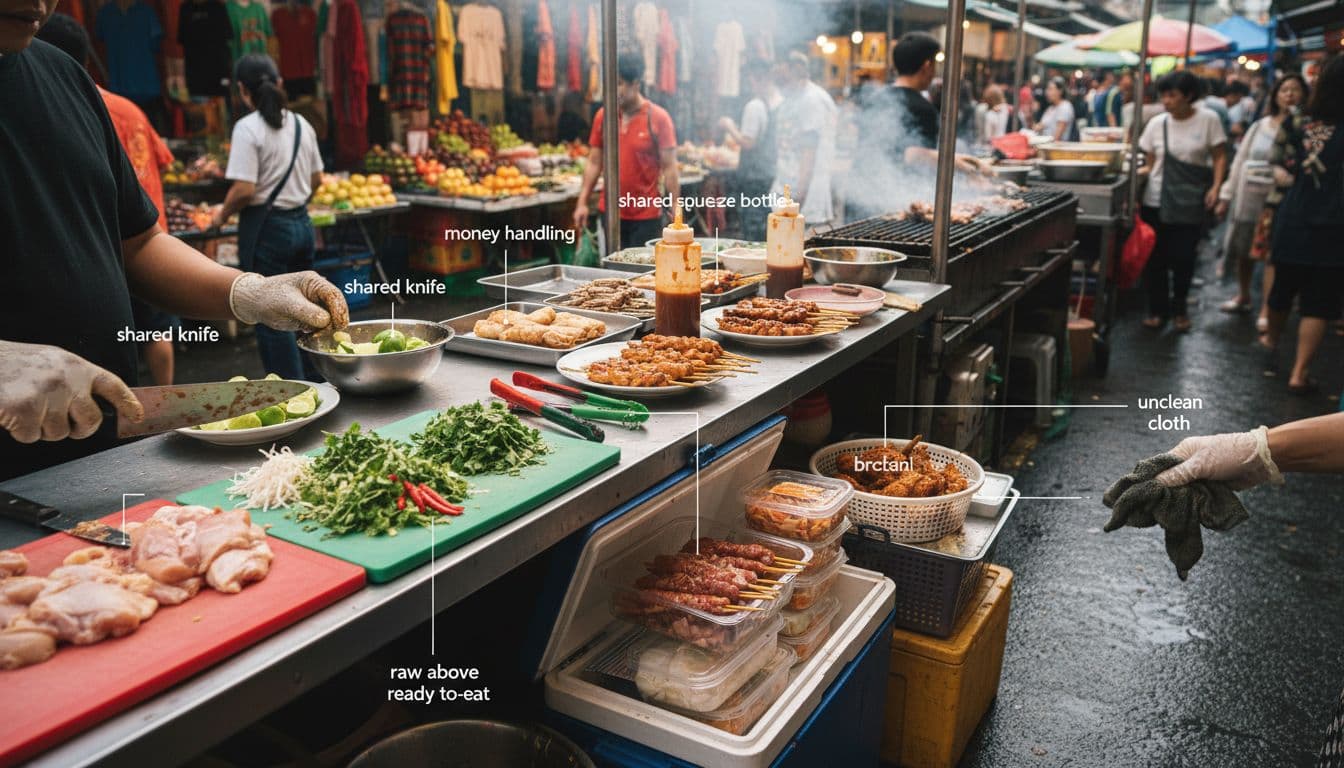
On a crowded prep line, contamination usually isn’t one big mistake. It’s overlap. Raw and ready-to-eat foods share the same space, the same tools, or the same hands.
Think of the counter like a one-lane bridge. If raw ingredients and finished food “cross” in the middle, there’s no safe way through. The most common danger zone is the moment an item goes from “needs cooking” to “ready to eat”, like sliced onions, chutneys, herbs, salads, or garnish.
A stall can look spotless and still be risky. The giveaway is not grime, it’s workflow: what touches what, and in what order.
Fast signals: the five things to scan before you order
You don’t need to hover or interrogate the cook. A 15-second scan tells you a lot if you know what to look for.
Here’s a quick “spotter’s table” you can keep in your head:
| What you see on the prep line | Why it’s a cross contamination risk | What “good” looks like |
|---|---|---|
| Same knife used on raw meat, then herbs or onions | Transfers raw juices to ready-to-eat items | Separate knife, or wash and sanitize before switching |
| Raw meat next to chopped vegetables | Drips and splashes travel farther than you think | Clear separation, different boards or trays |
| One cloth wiping everything | Spreads contamination like a paint roller | Separate wipes, or single-use towels |
| Gloves used as “forever gloves” | Gloves get dirty fast, just like hands | Gloves changed often, or frequent handwashing |
| Sauce bottle tip touches raw surfaces | Contaminates the bottle, then every dish after | Bottle never touches food or raw prep area |
One more signal people miss: speed without resets. When the line grows, vendors sometimes stop cleaning between steps. That’s when you’ll see the same board used as a “universal surface” for everything.
Hands, gloves, and the money loop (the sneakiest contamination path)
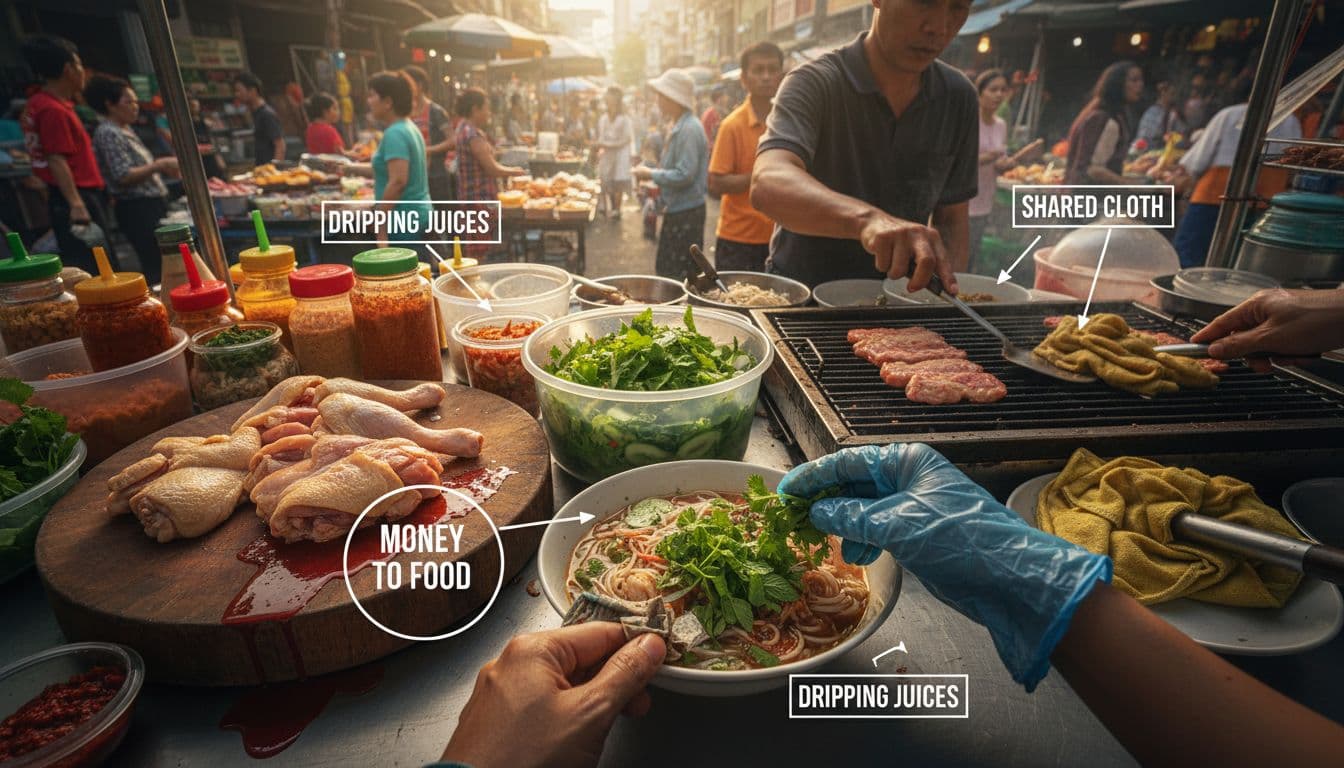
Cash is handled by hundreds of hands. If the same gloved hand takes money and then grabs garnish, that’s a direct line from street grime to your plate.
Watch for these patterns:
Single-person service: One vendor cooks, plates, takes payment, and garnishes. It can still be safe, but it requires frequent glove changes or handwashing, and many stalls can’t keep up.
Glove theater: Gloves look reassuring, but they’re only useful when they’re changed. A greasy glove touching raw meat, then a bun, then money, is worse than bare hands that get washed often.
Ready-to-eat touchpoints: Garnishes, sliced fruit, chutneys, and salad are high-risk because they skip the kill step. If you see money handling right before those items, treat it as a red flag.
For a broader view of common street food hygiene pitfalls, this overview of unsafe street food practices around the world is a useful reality check.
Shared tools and “wet surfaces”: where contamination spreads fastest
Cross contamination loves moisture. A wet cutting board, a slick countertop, a marinade puddle, even a damp towel, all help microbes move around.
Pay attention to:
Cutting boards and color cues: Some stalls use color-coded boards (great idea), but the system collapses when the red board (raw) becomes the “everything board” during a rush.
Tongs and spatulas: One set flipping raw skewers, then lifting cooked meat onto a serving plate is a classic mistake. Good stalls keep separate tools, or at least keep cooked-food tools away from raw trays.
The “one rag” problem: If you see one cloth wipe raw juice, then the prep counter, then the serving ledge, that’s cross contamination in real time. A clean-looking counter doesn’t help if the rag is doing the spreading.
A simple but important myth to skip while traveling: washing alone makes food safe. For example, guidance like the USDA’s notes on whether washing food promotes safety explains why rinsing can’t replace separation and proper handling.
Cooler and staging mistakes: “raw above ready-to-eat” is the danger stack
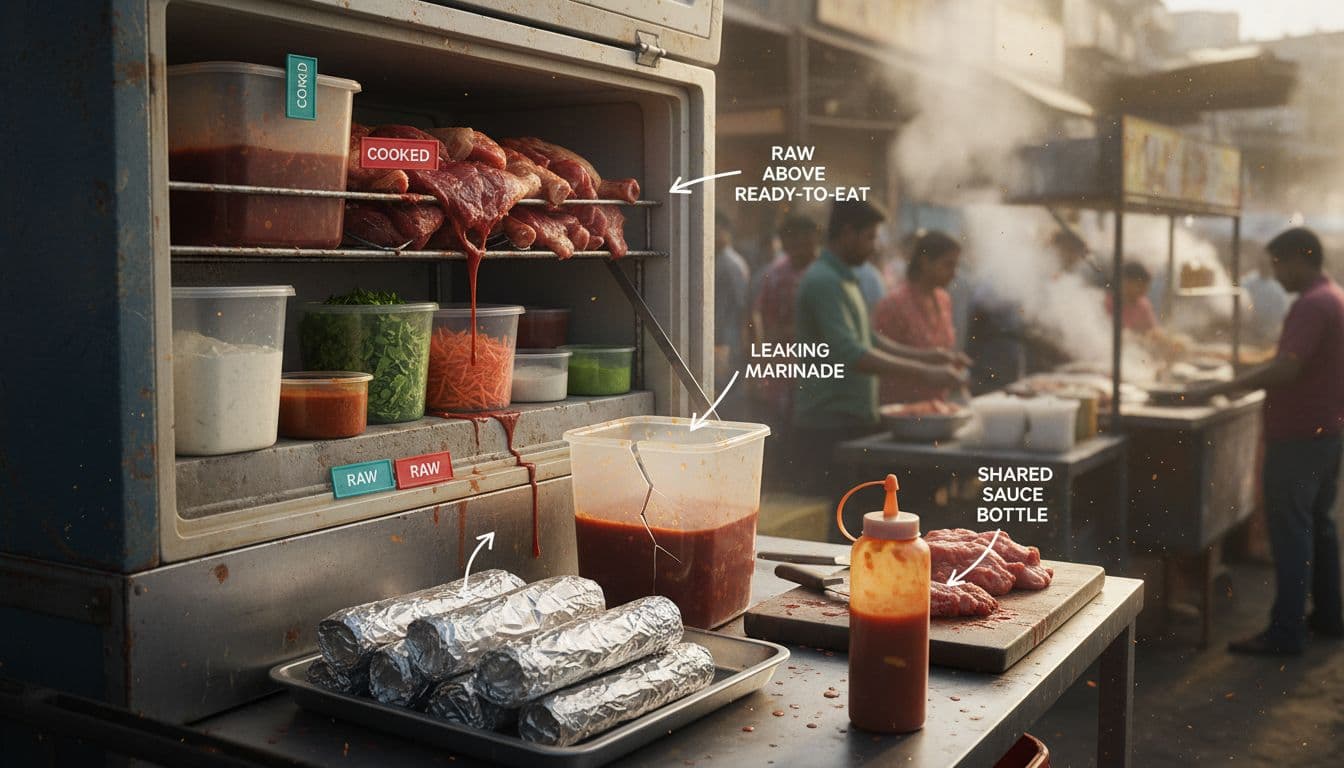
You might not always see inside the cooler, but many stalls store ingredients right beside the prep line. If you can see the setup, look for gravity problems.
Raw meat stored above sauces or veg: If a bag leaks, it drips down. That’s why “raw on the bottom” is a core rule.
Open marinades near cooked food: A container of raw marinade sitting next to finished kebabs is a quiet hazard, especially if the same spoon moves between them.
Crowded tubs with mixed purposes: When herbs, onions, and cooked items share one tight space, a single contaminated hand can affect the whole batch.
If you’re curious about how street businesses are expected to handle risks (waste, hygiene, and contamination), this street food business food safety guide lays out the basics in plain terms.
Smart customer moves that lower your risk (without ruining the fun)
You can’t control a stall’s setup, but you can choose the lower-risk path.
Pick food with a real kill step: Favor items cooked to order and served hot. Long-held foods can be fine, but they depend on time and temperature control you can’t verify.
Be cautious with raw add-ons: Ask for no salad, no raw garnish, or sauce on the side if the prep line looks messy.
Watch for a clean “plating zone”: Many good stalls keep one area that never touches raw items. If you see that separation, it’s a strong positive sign.
Avoid the rush peak if you’re unsure: The busiest moment is when cleaning breaks down. If the stall looks strained, come back later.
Conclusion: trust the workflow, not the shine
A stall can look spotless and still have cross contamination risks if raw food, tools, and hands keep crossing paths. Scan the prep line, watch the money loop, and notice whether ready-to-eat items are protected or exposed. With a little practice, your eyes will catch the small signals fast.
Street food is one of the best parts of travel, and a careful choice keeps it that way. Eat with curiosity, but keep your standards, because cross contamination doesn’t care how good the food smells.

Leave a Reply