
Raw street food can feel like a dare, especially when you’re far from home and the stall is calling your name. Ceviche glows with lime, oysters sit on crushed ice, salads look “healthy,” and fruit cups promise a clean, sweet break from fried snacks.
The truth is simpler: raw street food safety comes down to cold temperatures, clean hands, safe water, and smart timing. You don’t need to be a microbiologist, you just need a fast way to spot trouble before the first bite.
This guide is a quick, practical checklist (written for travelers and market-eaters, including readers of Street Food Blog) that helps you order with confidence and skip what isn’t worth the risk.
The 20-second raw street food safety scan (works almost anywhere)
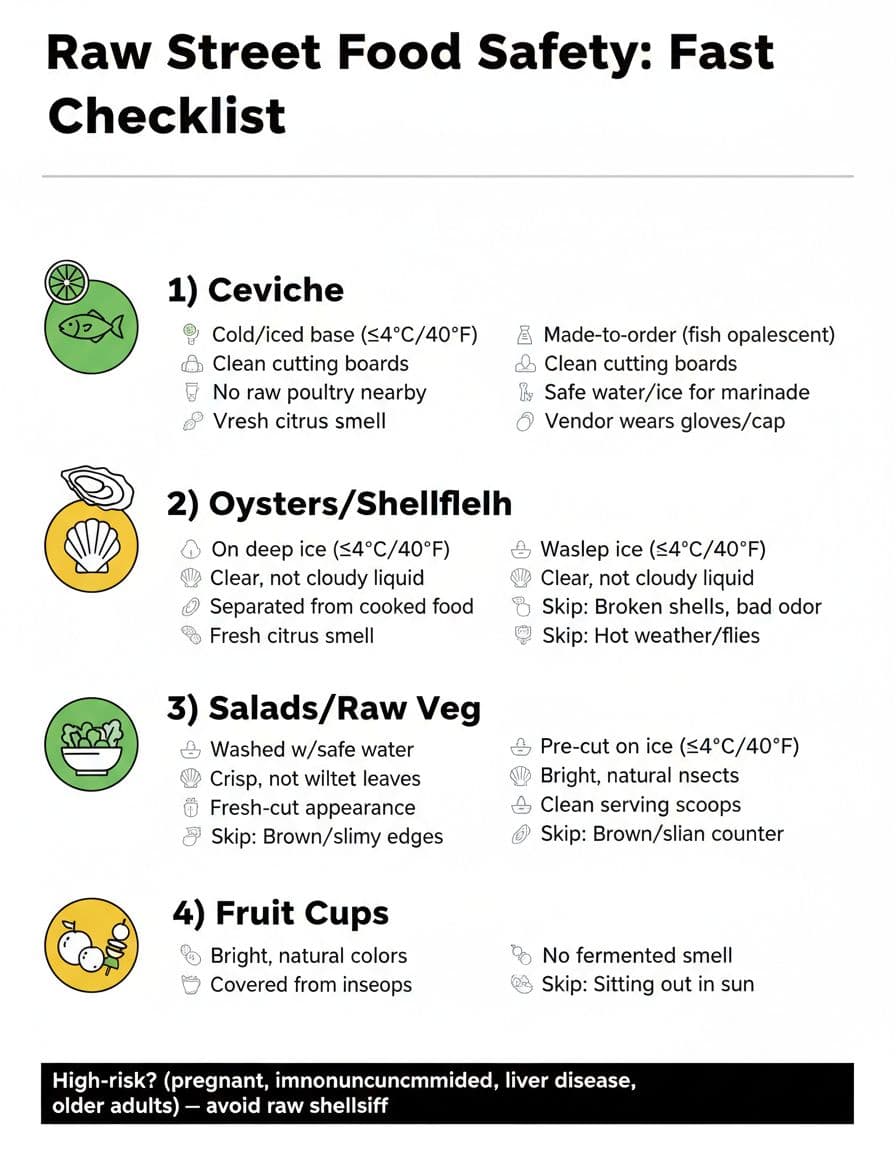
Before you order, take one calm look at the setup. If a stall passes these basics, most “raw” risks drop fast.
- Cold chain: is the food kept on ice or in a fridge (aim for 4°C/40°F or colder)?
- Made-to-order: are they assembling your portion now, or scooping from a tray that’s been sitting out?
- Hands and tools: do you see handwashing, clean gloves used correctly, or at least clean tongs?
- Separation: are raw seafood and ready-to-eat items kept apart (separate boards, knives, containers)?
- Water and ice: does the ice look factory-made and bagged, or like murky tap water?
- The “heat and flies” test: hot weather plus exposed food plus insects is your cue to walk away.
A simple rule: raw foods should look like they’re being treated like a cold, delicate ingredient, not a countertop garnish.
Quick skip-or-order table (fast decisions)
| Food | Safer when… | Skip when… |
|---|---|---|
| Ceviche | Made-to-order, fish kept on ice | Bowl has been pre-mixed and sits warm |
| Oysters | Very cold, shells handled cleanly | Warm, drying out, strong odor |
| Salads | Washed ingredients, chilled, cut fresh | Pre-chopped, wet, sitting at room temp |
| Fruit cups | Cut fresh, kept cold, clean knife | Same knife for money and fruit, questionable ice |
Ceviche safety: citrus isn’t cooking
Ceviche looks “cooked” because acid turns fish opaque. That color change is chemistry, not heat. Citrus can reduce some germs, but it doesn’t reliably kill everything you’d worry about in raw seafood.
What to look for at the stall:
Cold fish first: The raw fish (or shrimp, scallops) should be stored in a covered tray on ice, not displayed in the sun. If the vendor reaches into a cooler, that’s a good sign.
Made-to-order mixing: Ask for it assembled fresh. When ceviche sits, it warms up and the texture turns mushy, which also makes it harder to judge freshness.
One board for seafood, one for garnish: A clean stall often has a seafood board and a separate one for onions, cilantro, and chilies. Cross-contact is a common problem.
Smell test: Fresh seafood smells like the sea, not sour, not “fishy,” not ammonia-like.
For extra context on how food regulators think about ceviche handling, this public document on ceviche food safety requirements is a helpful read.
Oysters and raw shellfish: when to walk away
Oysters are high-reward, high-risk. They filter water for a living, which is why they can also carry pathogens that make people seriously ill, including Vibrio in warmer conditions. If you’re going to eat them raw, your standards should be strict.
What “good” looks like:
They’re kept very cold: Oysters should be nestled in ice, draining well, not soaking in lukewarm water. Shellfish left out at ambient temp is the biggest red flag.
Clean shucking habits: The shucker should work on a clean surface, rinse tools, and avoid splashing oyster liquor everywhere. If they wipe the knife on a rag that’s been used all day, think twice.
No off odors: Strong, sour, or rotten smells mean stop.
Know if you’re high-risk: If you’re pregnant, immunocompromised, have liver disease, or you’re an older adult, raw shellfish is a bad bet. Many health agencies highlight this point in consumer warnings, such as this public health guidance on labeling raw and uncooked foods.
A good market vendor won’t argue if you pass on oysters. They’ve seen enough travelers learn the hard way.
Raw salads and herbs: the hidden water problem
A street salad can be the sneaky one. Seafood gets all the attention, but raw veg often depends on one thing you can’t see: the water used for washing.
What to watch:
Pre-cut piles: Chopped lettuce and herbs wilt fast. If you see a large tub of pre-chopped greens sitting out, skip it. The more cutting, the more surfaces for germs to cling to.
Dressing risks: Creamy dressings and raw-egg sauces raise the stakes. If the dressing is kept unrefrigerated in a squeeze bottle all day, pick something else.
Ask a simple question: “Was this washed with filtered water?” You won’t always get a clear answer, but hesitation plus a messy setup is information.
If you’re pregnant, the risk math changes. The FDA’s overview of food safety tips for pregnancy explains why extra caution around raw foods can be wise.
Fruit cups and cut fruit: safe, until ice shows up
Fruit feels like the “healthy” option, but cut fruit is also a ready-to-eat food with lots of moisture. Once it’s cut, it should stay cold and protected.
Safer fruit cup cues:
They cut from whole fruit: Whole mangoes, pineapples, watermelon, and papaya on display are a positive sign. Pre-cut fruit in a warm tub is not.
A clean knife and clean hands: Fruit vendors work fast. That’s fine. What you don’t want is the same hand touching cash, phone, then fruit without washing.
Cold holding: A chilled container or ice bath under the fruit cups is ideal, especially in humid heat.
Ice is the wildcard: If they add ice, it should look like bagged cubes or shaved ice from a machine. If the ice looks cloudy, wet, or scooped from an open bucket, skip it.
Fruit is also where you can “upgrade” safety by choosing fruits you can peel (bananas, oranges) when you’re unsure.
Vendor cues that matter more than a long line
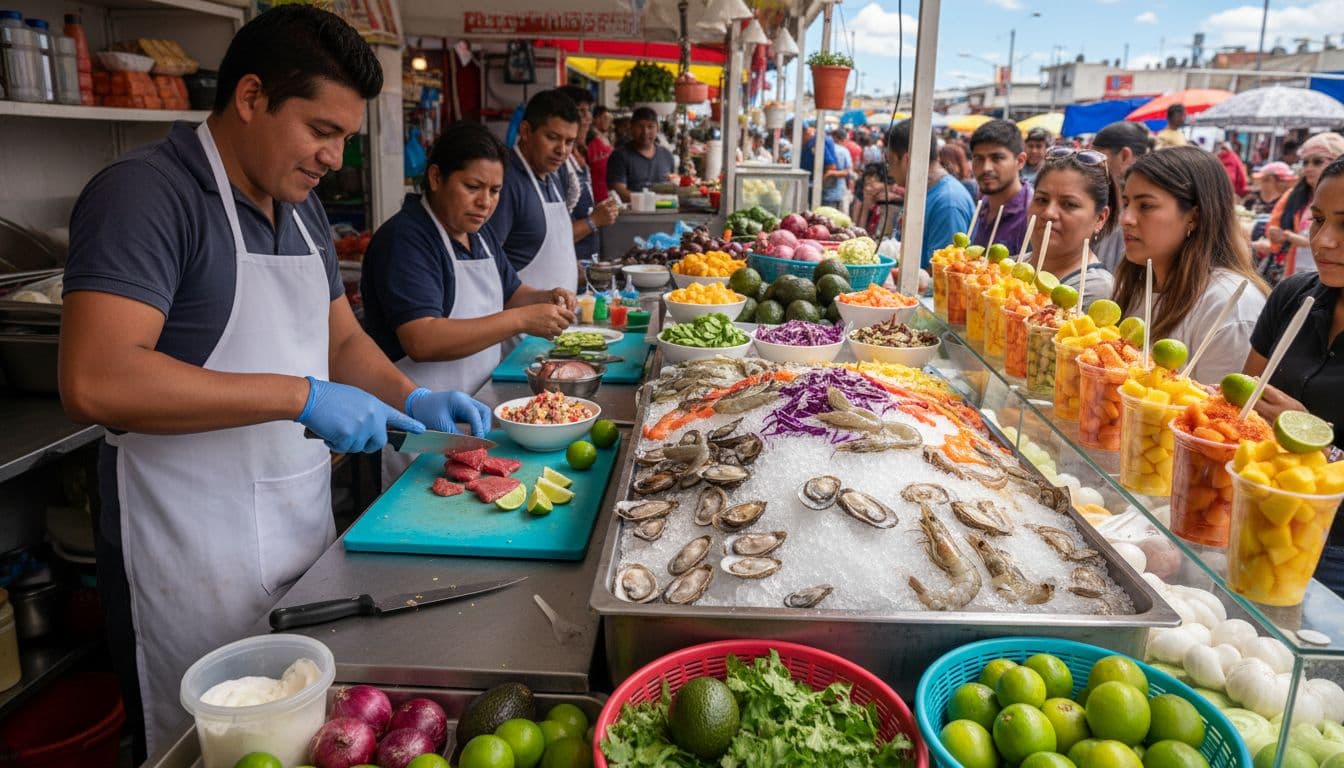
Busy stalls can be great, but “busy” doesn’t automatically mean safe. A crowd can form around cheap prices, a loud vendor, or a good location.
Look for these practical signals instead:
- A clear system: one person handles money, another handles food, or they change gloves and wash hands.
- Cold storage you can see: a cooler, ice trays, or a fridge, not just a bowl on the counter.
- Covered ingredients: lids, wrap, or sneeze guards, even simple ones.
- Separate utensils: tongs for ready-to-eat items, not the same spoon used for raw seafood and toppings.
- Clean wiping habits: a bucket for sanitizer or fresh cloths, not one grim rag.
If the stall looks like a tiny kitchen, not a messy craft table, you’re on the right track.
If you get sick: don’t tough it out
Most traveler stomach bugs pass, but raw seafood illness can hit harder.
Get medical help fast if you have high fever, signs of dehydration, blood in stool, severe weakness, or symptoms that last more than a couple days. If you ate raw shellfish and feel very unwell, mention that detail; it helps clinicians narrow causes. When possible, report the stall to local health authorities, especially if others are also sick.
Conclusion: eat boldly, but eat smart
Raw street food can be one of the best memories of a trip, or the reason you spend two days staring at a hotel wall. The difference is often a quick scan: cold food, clean tools, safe water, and made-to-order prep. Keep this raw street food safety checklist in your pocket, and treat oysters as the “special occasion” choice, not the default snack.
What’s the next market you’re heading to, and which raw item are you most tempted to try?

Leave a Reply